
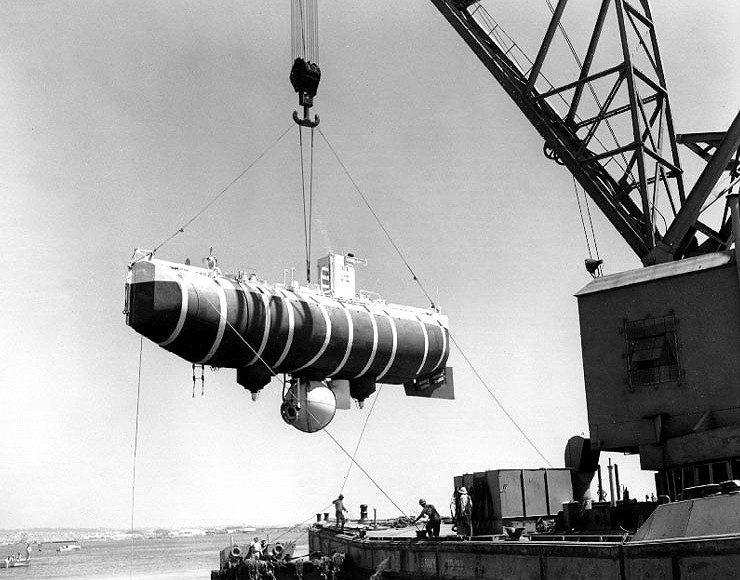
How deep is the deepest crewed dive? It depends on which page is asked, because the sources below give different figures for dives into the Mariana Trench. Every depth is kept exactly as its source states it, with its date and its units, and none is converted or averaged.
1960: Trieste, the first crewed vessel at Challenger Deep
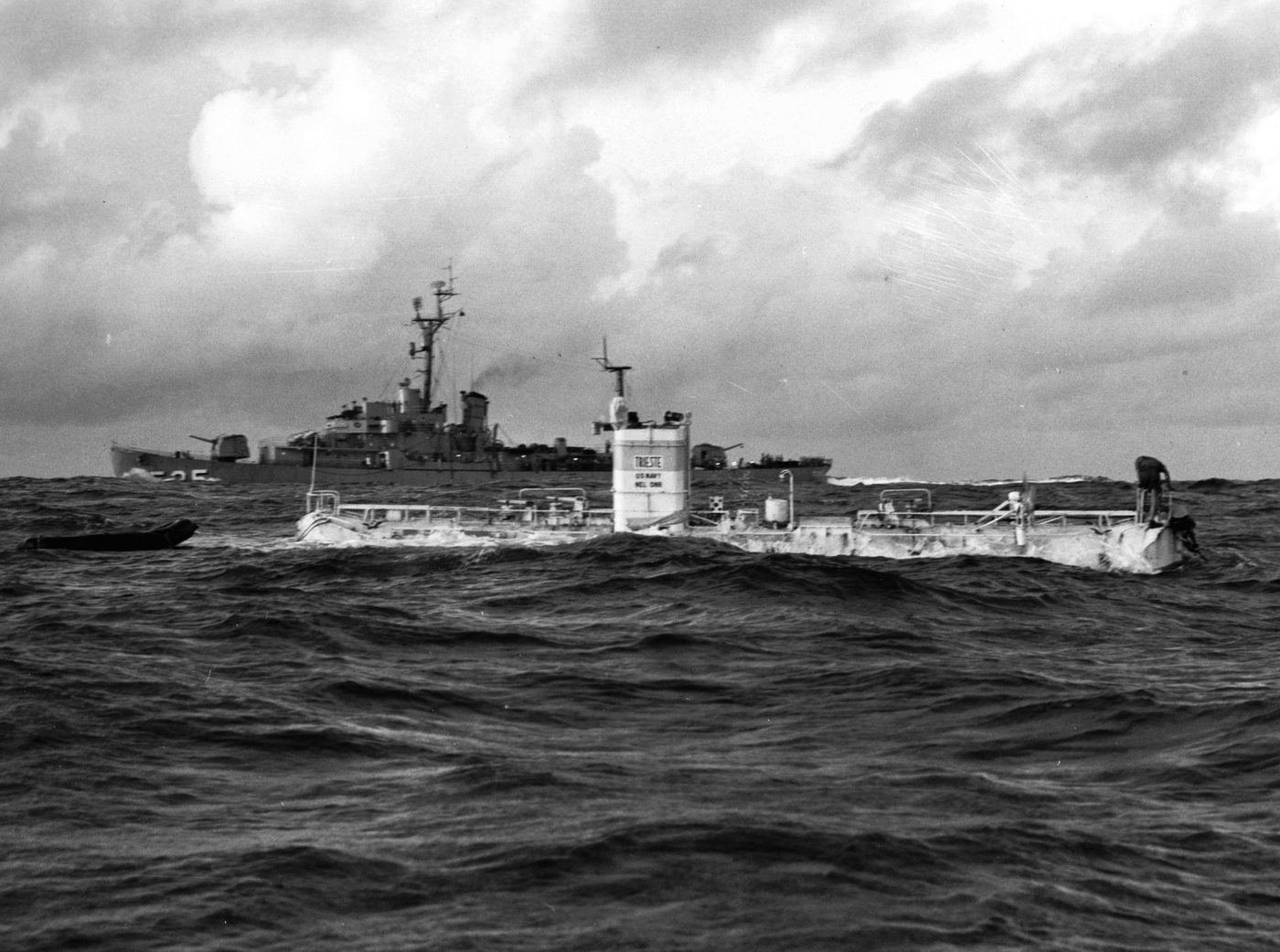
The National Museum of the U.S. Navy says the bathyscaph Trieste, designed by Swiss scientist Auguste Piccard and launched in 1953, was bought by the Navy in 1958. On 23 January 1960, with Jacques Piccard and Lieutenant Don Walsh aboard, it reached what the museum calls a record depth of approximately 35,000 feet in Challenger Deep. The Office of Naval Research gives approximately 36,000 feet and says the pair could stay only 20 minutes because the trip had to finish in daylight. Triton Submarines, maker of Limiting Factor, gives 10,912 metres for the same dive. ONR adds that a cloud of particles from the sea floor engulfed the vessel at the bottom, preventing further observations, and that a crack had scarred one of its outer plexiglass panels.
2019: Limiting Factor, built to go back
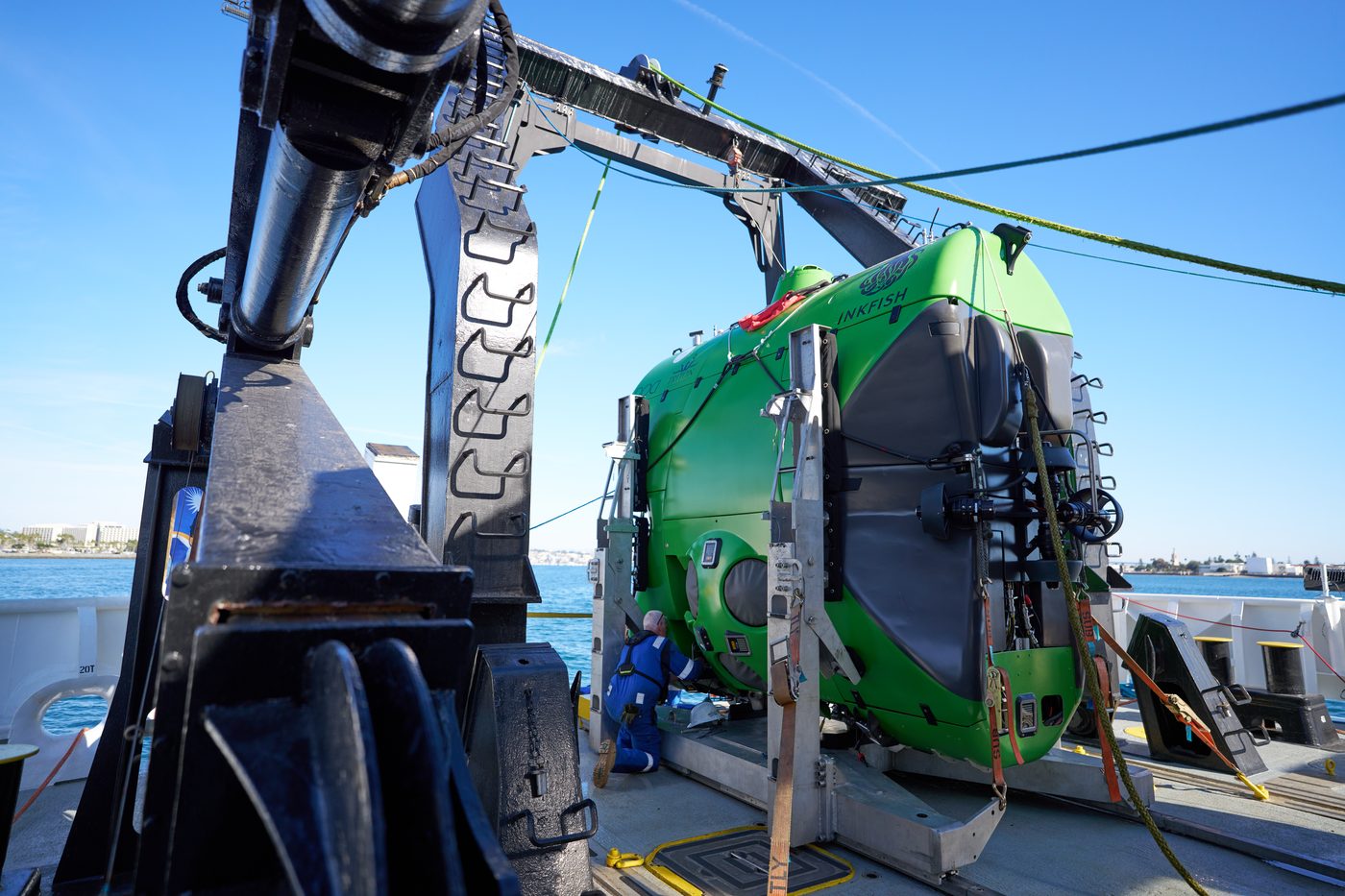
Woods Hole Oceanographic Institution says James Cameron piloted Deepsea Challenger to Challenger Deep on 26 March 2012, and National Geographic called him the first person to reach it solo. In a May 2019 release, Triton Submarines said the Five Deeps Expedition, with Victor Vescovo piloting Limiting Factor, reached a maximum depth of 10,928 metres, 16 metres deeper than any previous crewed dive, and made four dives to the bottom between 28 April and 5 May 2019, two of them solo. The same release gives 10,908 metres for Cameron, whose sub National Geographic says carried a sediment sampler, a robotic claw and gauges for temperature, salinity and pressure. Triton describes Limiting Factor as certified to full ocean depth and lists a titanium crew-compartment hull 90 millimetres thick and room for two people; a March 2025 trade report names it DSV Bakunawa, formerly Limiting Factor.
2020: Fendouzhe, 10,909 metres
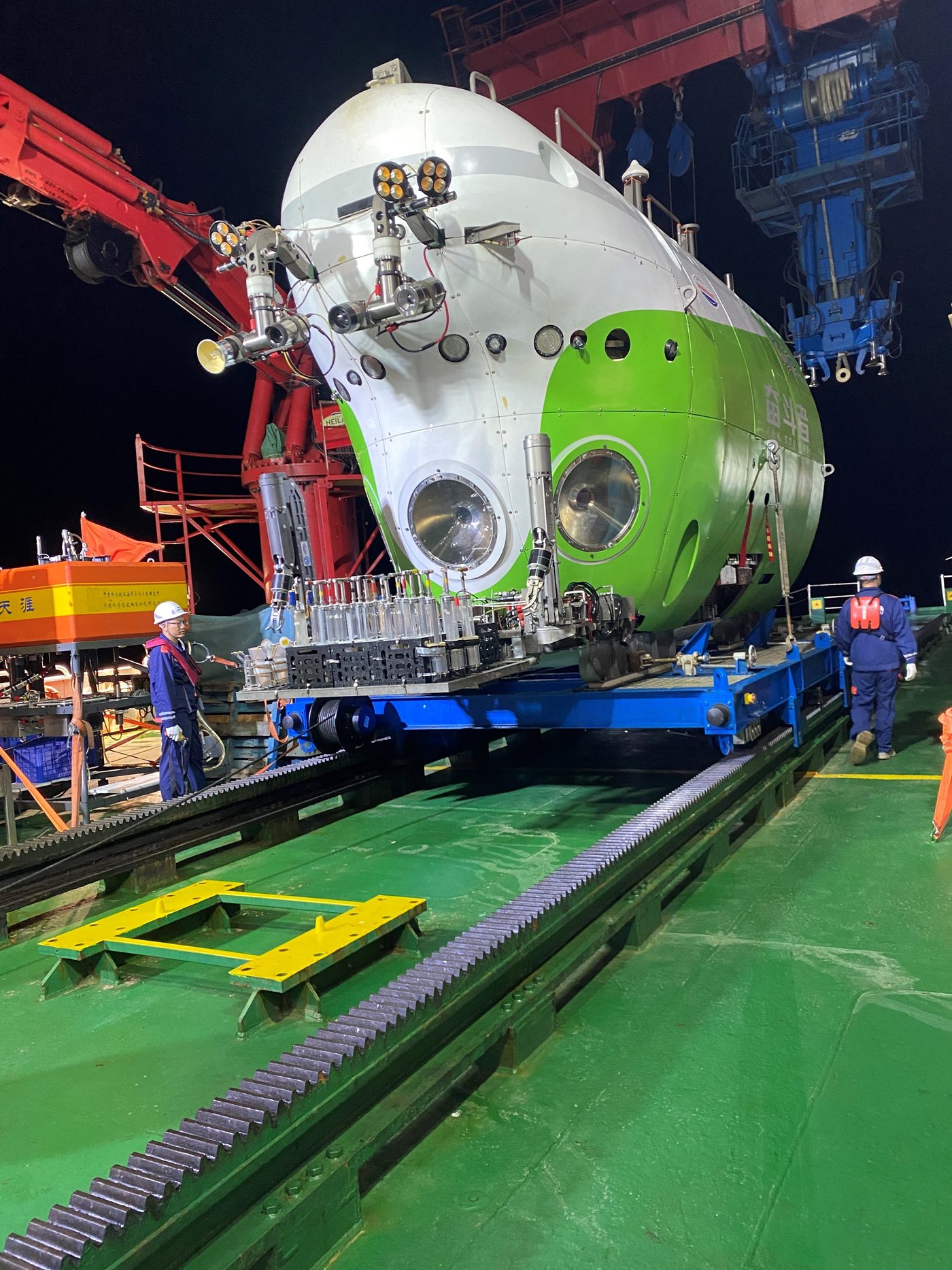
The Chinese Academy of Sciences, citing CCTV News, reports that Fendouzhe landed in the Mariana Trench at a depth of 10,909 metres on 10 November 2020, a new record for Chinese manned deep-diving. It says the vessel completed 13 undersea operations, eight of them beyond 10,000 metres, and that its three divers used an underwater acoustic link to the mother ship Exploration-I. It adds that the divers retrieved three samples earlier placed on the seabed in half an hour on 16 November.
For contrast: Alvin, rated to 6,500 metres
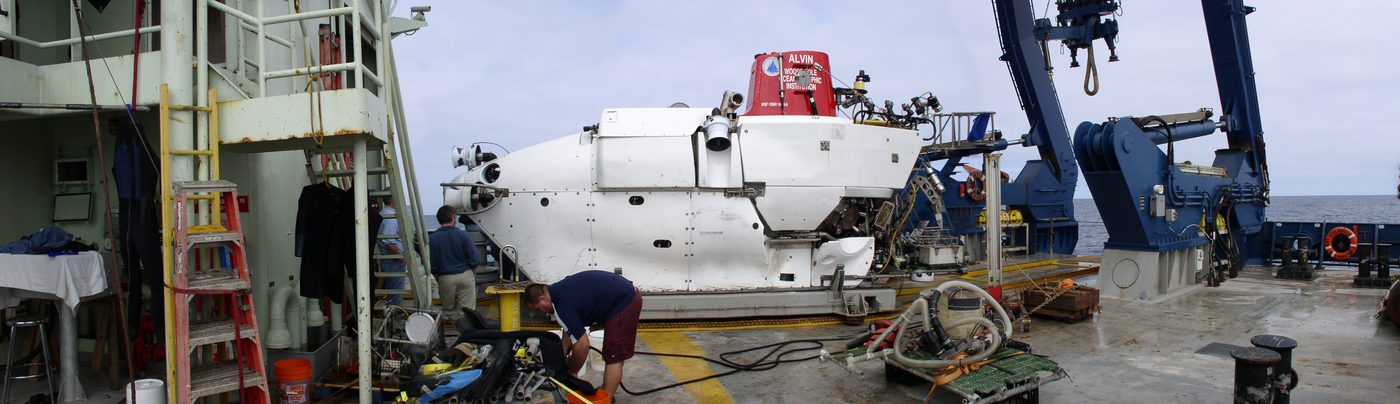
Woods Hole Oceanographic Institution says Alvin, commissioned in 1964, takes two scientists to depths reaching 6,500 metres on dives lasting up to ten hours, with two robotic arms for instruments and samples, and that this depth rating gives in-person access to 99% of the ocean floor. A WHOI notice dated 1 July 2026 says US Navy certification lets Alvin resume operations to 6,500 metres after a routine overhaul. That is a depth rating, not a record dive.
Figures as each source states them
- Navy museum page: Trieste, approximately 35,000 feet, 23 January 1960.
- Office of Naval Research, 31 January 2020: Trieste, approximately 36,000 feet below sea level.
- Triton Submarines, 13 May 2019: Trieste 10,912 metres, Deepsea Challenger 10,908 metres, Limiting Factor 10,928 metres.
- Chinese Academy of Sciences, 1 December 2020: Fendouzhe, 10,909 metres.
- Ocean News, 4 March 2025: Challenger Deep approximately 10,925 metres (35,843 feet) below sea level.
The sources do not explain the differences. Descent time also varies: the Navy museum page says Trieste’s descent took nine hours, while the Office of Naval Research says nearly five.
The bottom line
The pages describe dives by different vessels in different years, so each figure belongs to the body that gave it and is not a single ranking. Between them they place Trieste, Deepsea Challenger and Limiting Factor in Challenger Deep and Fendouzhe in the Mariana Trench, with Alvin working shallower. They are records of past dives, not guidance for anyone.
Sources
- Bathyscaph Trieste, National Museum of the U.S. Navy, Naval History and Heritage Command, read 27 October 2026 (history.navy.mil)
- ‘Lucky Day’: Navy Celebrates 60th Anniversary of Deepest Ocean Dive, Office of Naval Research, 31 January 2020, read 27 October 2026 (onr.navy.mil)
- Deepest Submarine Dive in History, Five Deeps Expedition Conquers Challenger Deep, Triton Submarines, 13 May 2019, read 27 October 2026 (tritonsubs.com)
- Triton 36000/2: Full Ocean Depth Submersible, Triton Submarines, read 27 October 2026 (tritonsubs.com)
- DEEPSEA CHALLENGER, Woods Hole Oceanographic Institution, read 27 October 2026 (whoi.edu)
- James Cameron Completes Record-Breaking Mariana Trench Dive, National Geographic, 25 March 2012, read 27 October 2026 (nationalgeographic.com)
- Chinese Submersible Fendouzhe Returns to Sanya Port After Setting New Record, Chinese Academy of Sciences, 1 December 2020, read 27 October 2026 (english.cas.cn)
- HOV Alvin, Woods Hole Oceanographic Institution, read 27 October 2026 (whoi.edu)
- Base Materials to Supply Buoyancy Solutions to Inkfish Full Ocean Depth Submersible, Ocean News & Technology, 4 March 2025, read 27 October 2026 (oceannews.com)