
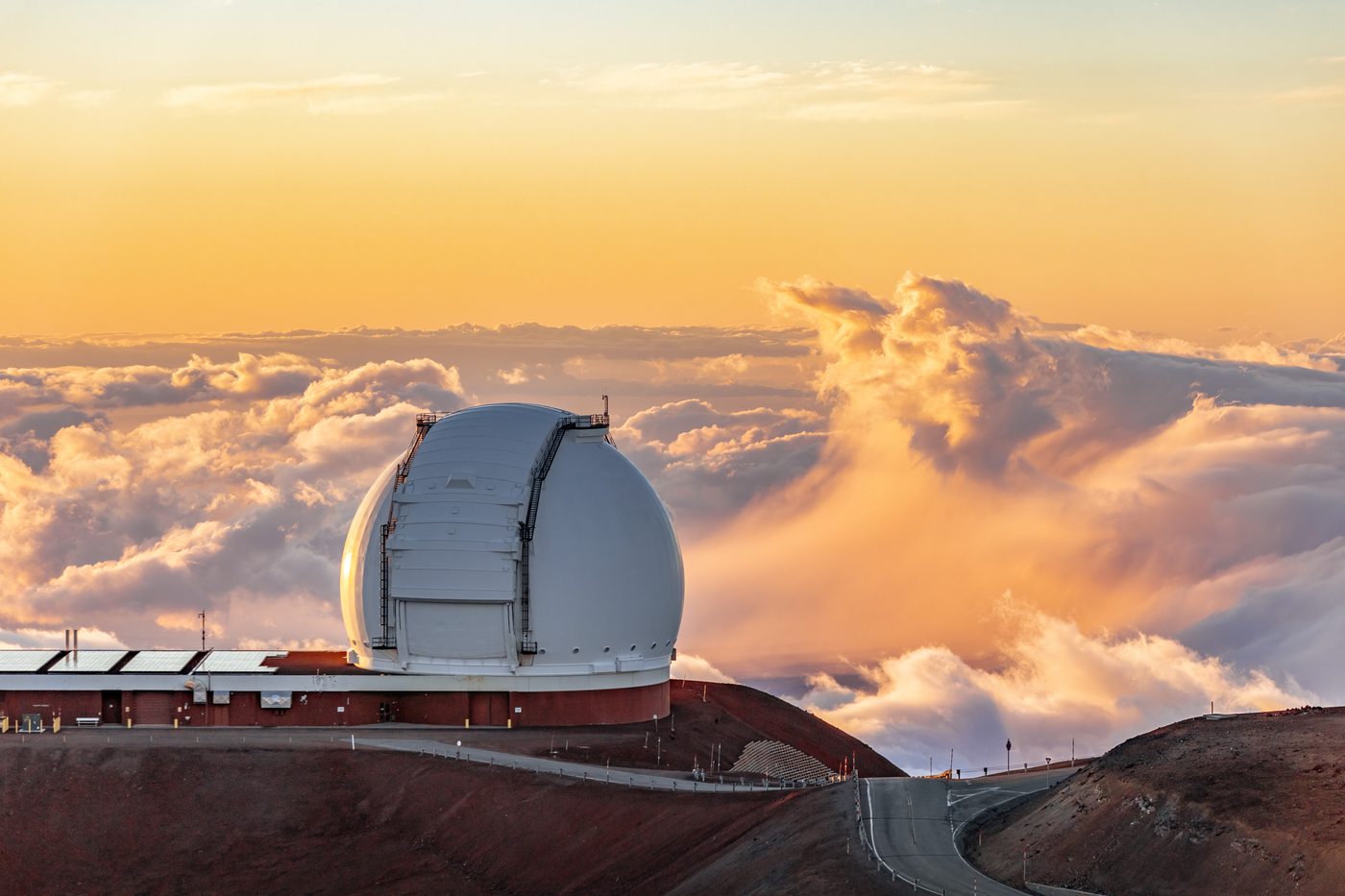
A telescope’s “size” can be a mirror diameter, an equivalent single-mirror diameter, a dish aperture or a planned figure. Each entry below names the body that gives the number and what it measures. The article does not rank the telescopes.
Keck I and II: two 10-metre telescopes on Mauna Kea
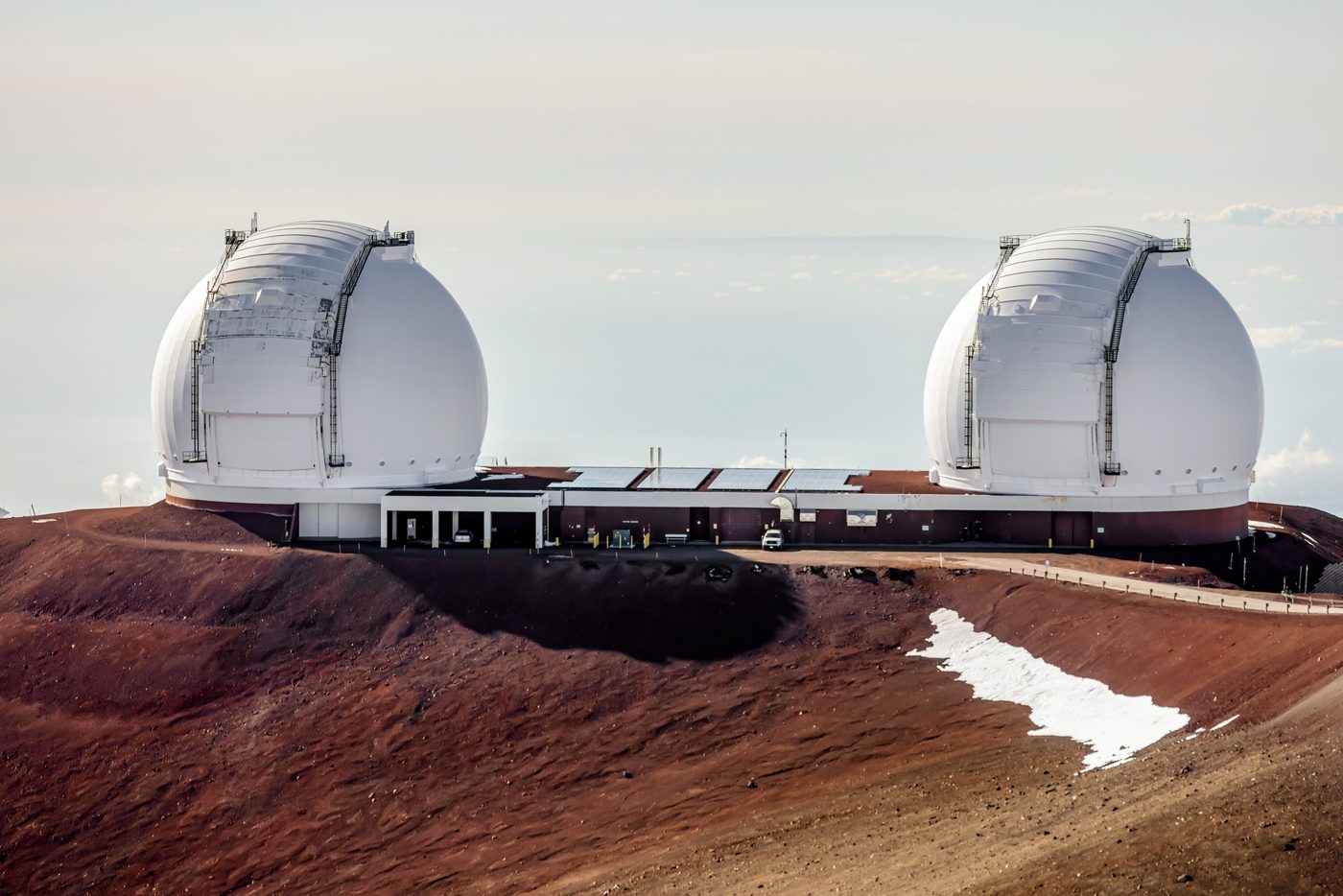
W. M. Keck Observatory describes each of its two telescopes as 10-metre, with an altitude-azimuth design that uses about 270 tons of steel per telescope. It says a computer-controlled system adjusts each mirror segment relative to its neighbours to an accuracy of four nanometres, twice per second, countering the pull of gravity. It also says Keck was the first facility on Mauna Kea to use remote observing, and that a six-inch-wide deformable mirror in its adaptive optics system changes shape up to 2,000 times per second to cancel atmospheric distortion.
Gran Telescopio Canarias: 36 segments acting as one mirror
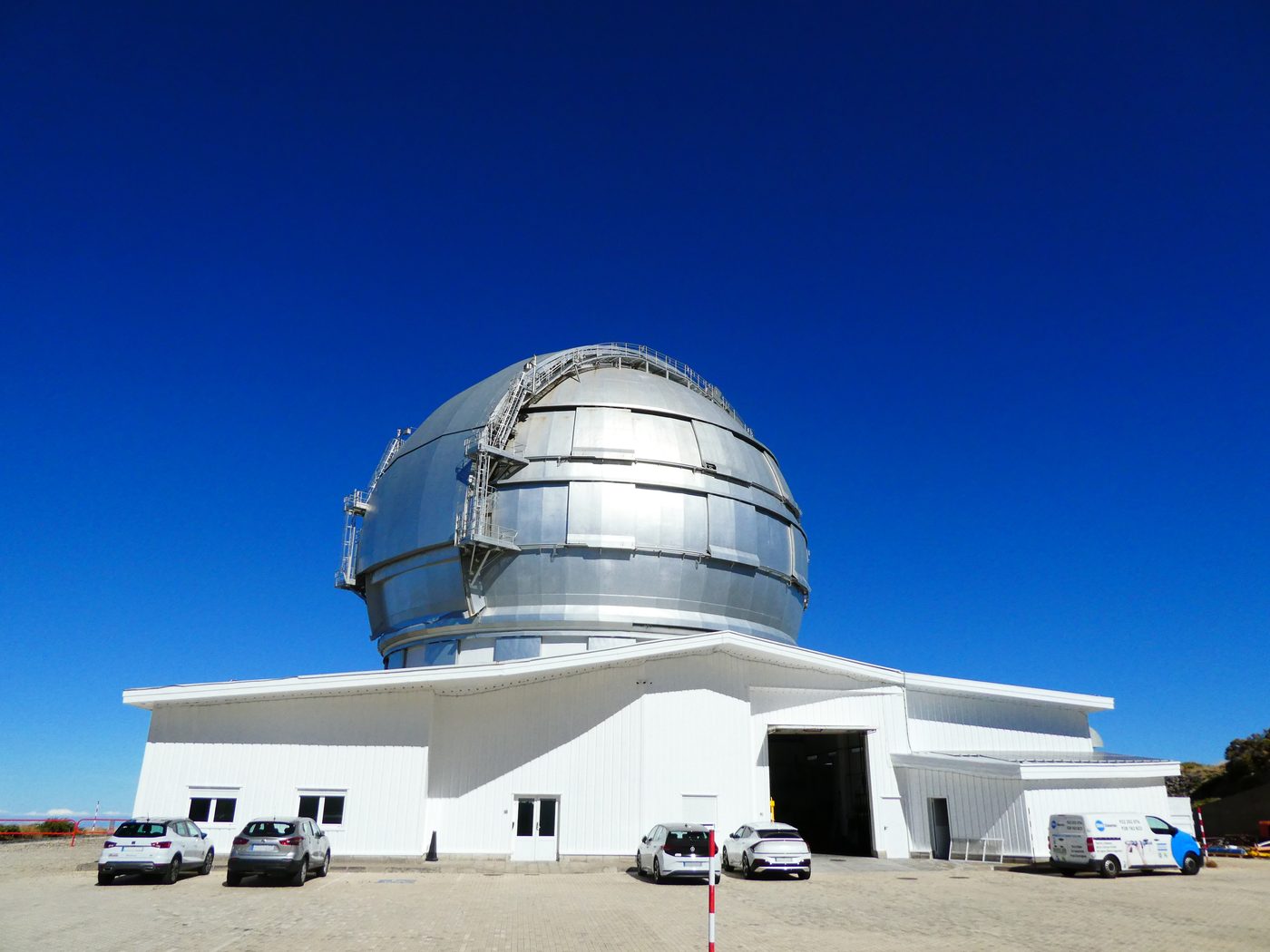
The Gran Telescopio CANARIAS says its primary mirror has 36 hexagonal segments that act as a single mirror, with a light-collecting surface equivalent to that of a 10.4-metre monolithic mirror. The page says the telescope is designed to observe optical and infrared light and gives 14 July 2007 for the first-light ceremony at the Roque de los Muchachos Observatory on La Palma and March 2009 for the start of scientific production.
SALT: 91 mirrors in an 11-metre array
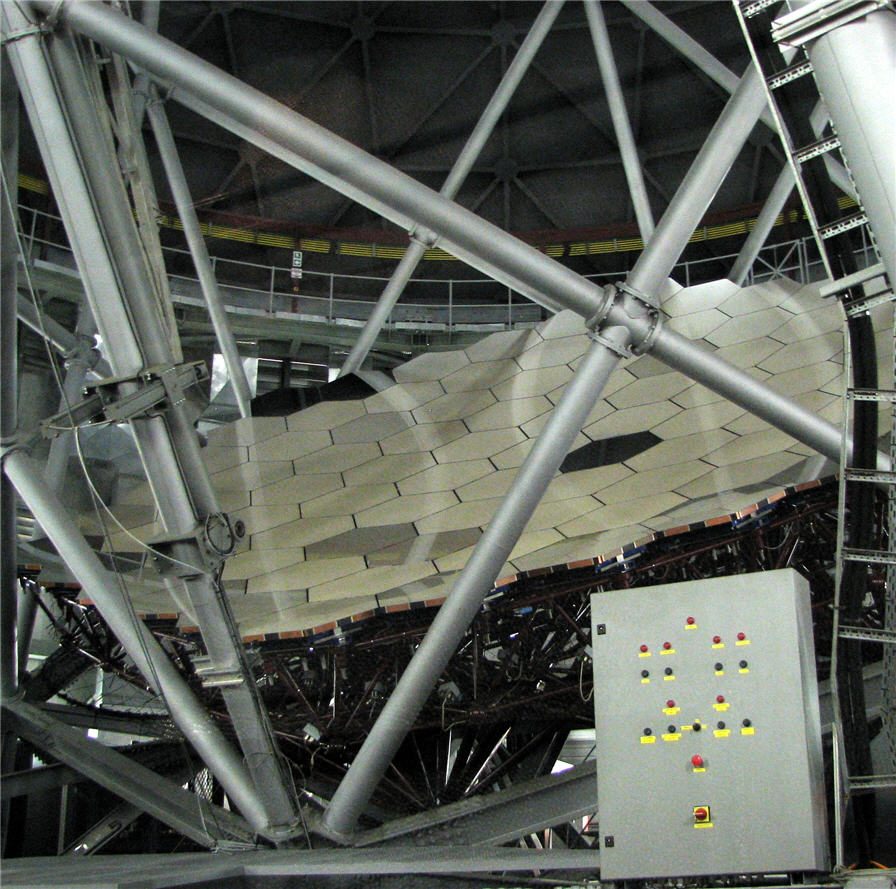
The South African Astronomical Observatory says the Southern African Large Telescope, outside Sutherland, has an 11-metre-wide hexagonal primary mirror array of 91 individual 1-metre hexagonal mirrors, and calls it the largest single optical telescope in the southern hemisphere. SAAO adds that SALT operates from the near ultraviolet to the near infrared, 320 to 1700 nanometres, and that its redesigned optical system gives a larger field of view than the similar Hobby-Eberly Telescope in Texas. SALT’s own page describes a 25-metre-diameter dome and a system that aligns the 91 segments to approximate one spherical mirror.
FAST: a 500-metre aperture with a 300-metre working surface
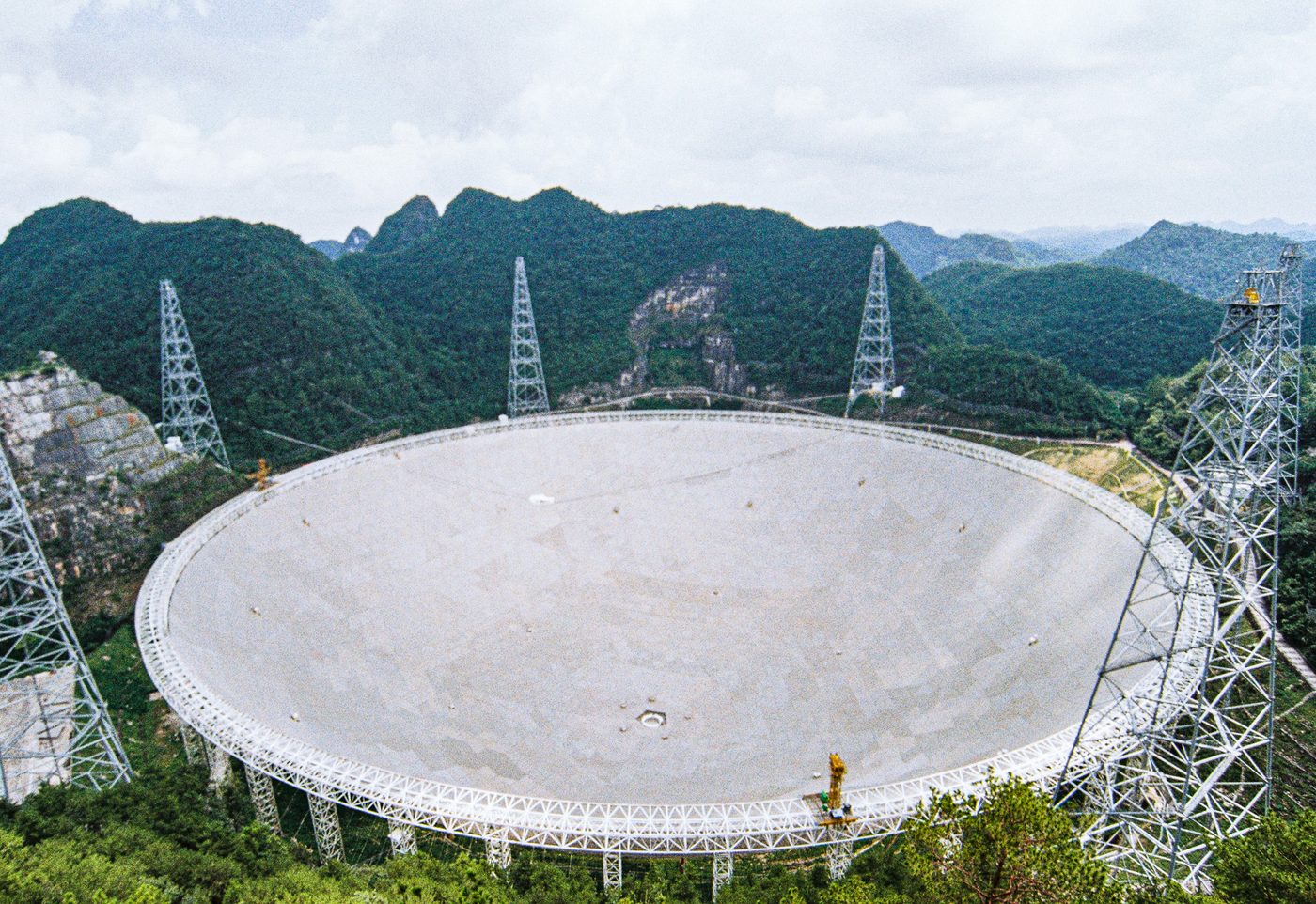
A paper by Di Li and Zhichen Pan, written before FAST’s expected completion in September 2016, lists a spherical reflector with an aperture diameter of 500 metres and an illuminated parabolic primary aperture 300 metres across, formed by 2225 hydraulic actuators moving the panels, with a light-weight feed cabin driven by six cables. A Chinese Academy of Sciences release carrying Xinhua text says FAST opened to astronomers worldwide on 31 March 2021 and that it had found 300 pulsars by then, noting that applications from abroad would be evaluated.
Webb: 6.5 metres, folded for launch
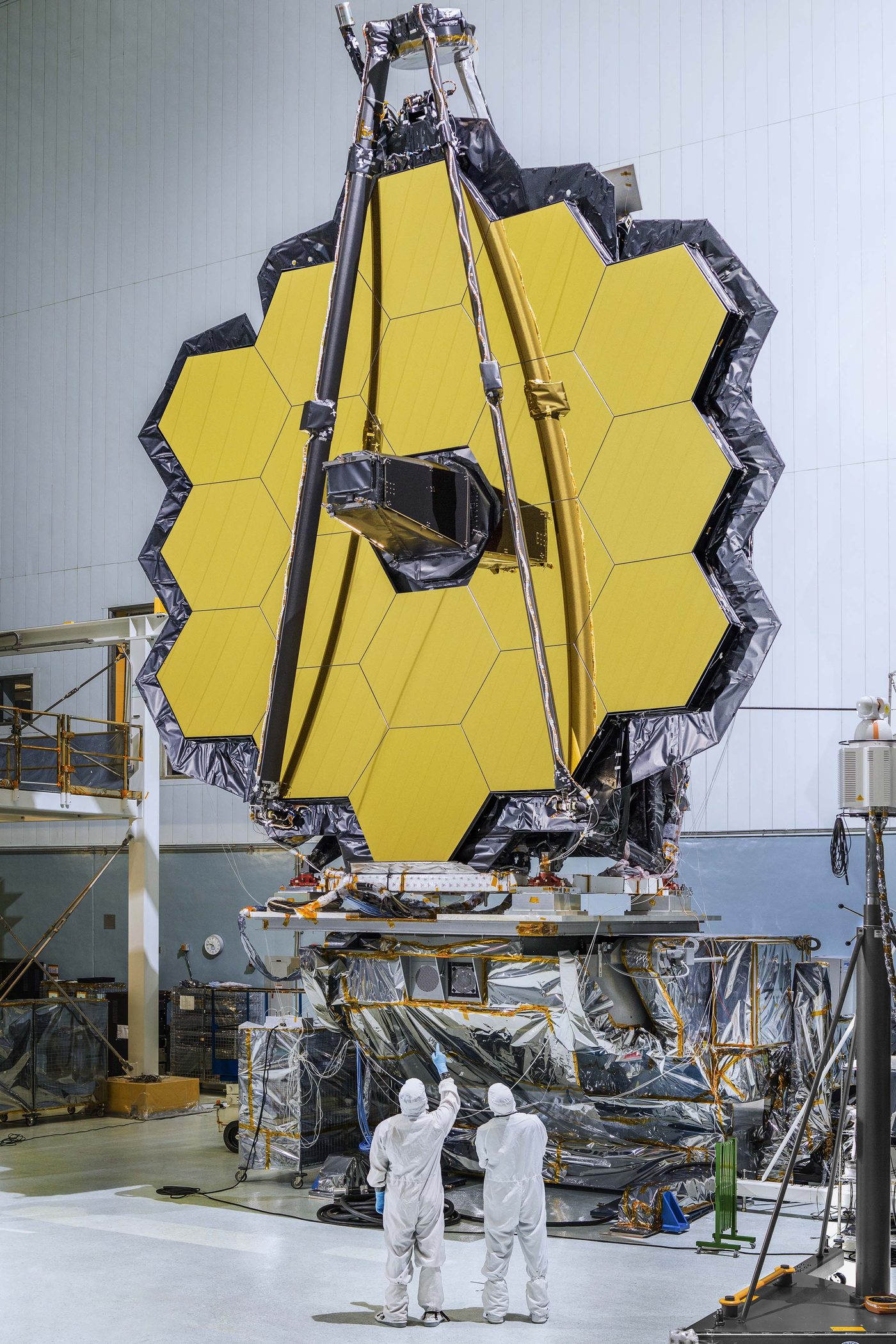
NASA says Webb’s primary mirror is 6.5 metres across and is made of 18 hexagonal beryllium segments, each 1.32 metres flat to flat, with a gold coating 100 nanometres thick. NASA calls it the largest mirror ever launched into space and says it is segmented so that it can fold for launch.
The Extremely Large Telescope: 39 metres, not yet finished
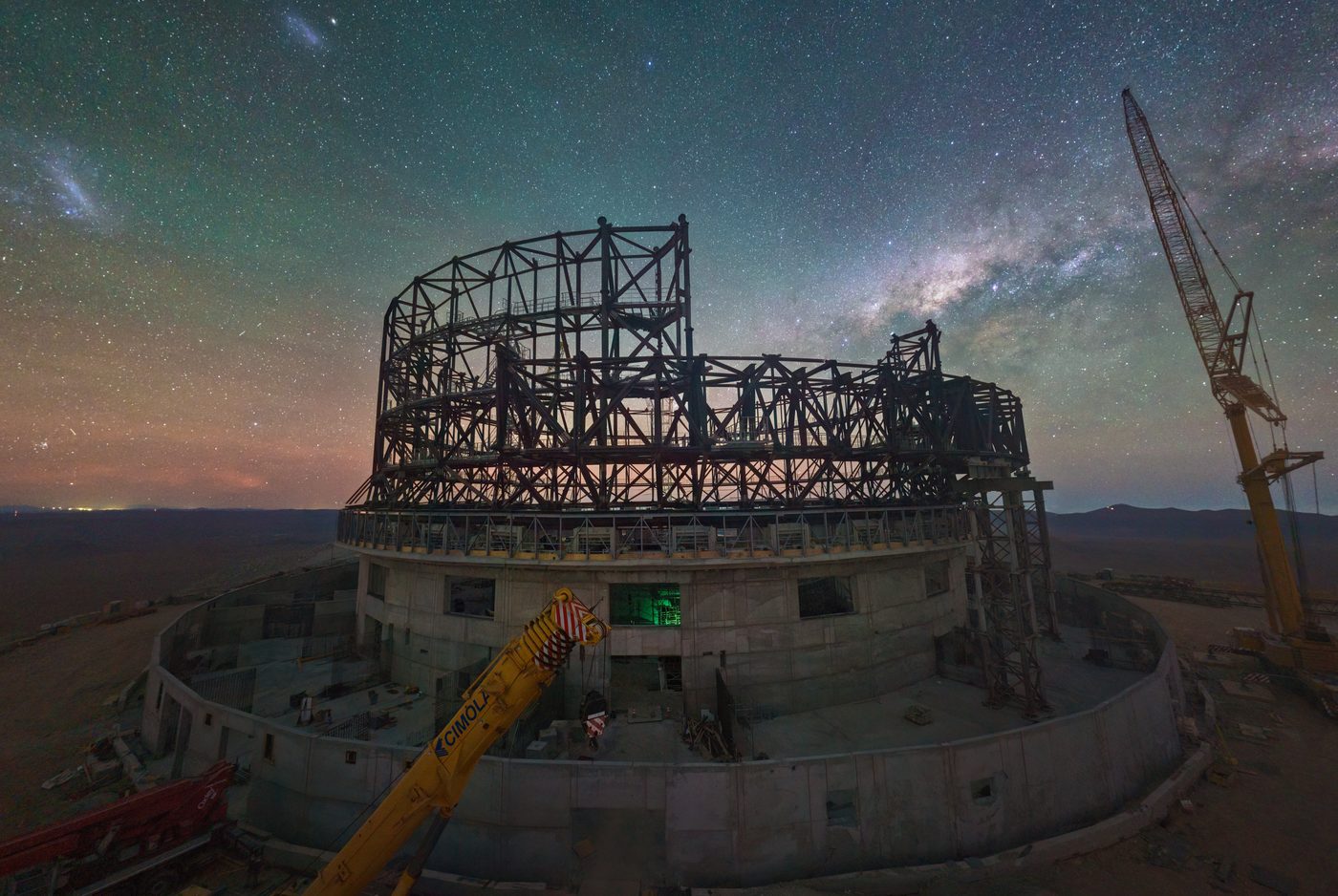
ESO’s facts page gives the ELT a 39-metre main mirror of 798 segments and a light-collecting area of 978 square metres, on Cerro Armazones in Chile at an altitude of 3046 metres, with a five-mirror design. It is under construction. ESO’s timeline lists telescope first light in 2029, completion of main-mirror segment installation in 2028 and first scientific observations in December 2030, all marked as planned.
The bottom line
These numbers answer different questions: a mirror diameter, an equivalent diameter, an array width, a dish aperture and a planned mirror. The ELT figures describe a telescope that ESO lists as unfinished, and its dates are plans, not results. Anyone comparing the telescopes should compare like with like and check the date on each figure.
Sources
- Keck I and Keck II Telescopes, W. M. Keck Observatory, read 27 October 2026 (keckobservatory.org)
- The Gran Telescopio CANARIAS, Instituto de Astrofísica de Canarias, read 27 October 2026 (gtc.iac.es)
- Telescope SALT, South African Astronomical Observatory, read 27 October 2026 (saao.ac.za)
- Telescope, Southern African Large Telescope, read 27 October 2026 (salt.ac.za)
- The Five-hundred-meter Aperture Spherical Radio Telescope (FAST) Project, Di Li and Zhichen Pan, arXiv:1612.09372, submitted 30 December 2016, doi 10.48550/arXiv.1612.09372, proceedings of URSI AT-RASC 2015, published in Radio Science, read 27 October 2026 (arxiv.org)
- China’s FAST Telescope to Officially Open to Global Astronomers, Chinese Academy of Sciences, 31 March 2021, read 27 October 2026 (english.cas.cn)
- Webb’s Mirrors, NASA, read 27 October 2026 (jwst.nasa.gov)
- Facts about the ELT, European Southern Observatory, read 27 October 2026 (elt.eso.org)
- Timeline, ELT, European Southern Observatory, read 27 October 2026 (elt.eso.org)