
Some ocean facts sound like exaggerations until you read the agency that tracks them. Here are five, each checked against NOAA’s own pages, along with the detail that the quick headline version tends to leave out. Every page was read on 27 October 2026, and the figures are NOAA’s.
1. Living light is not rare in the sea
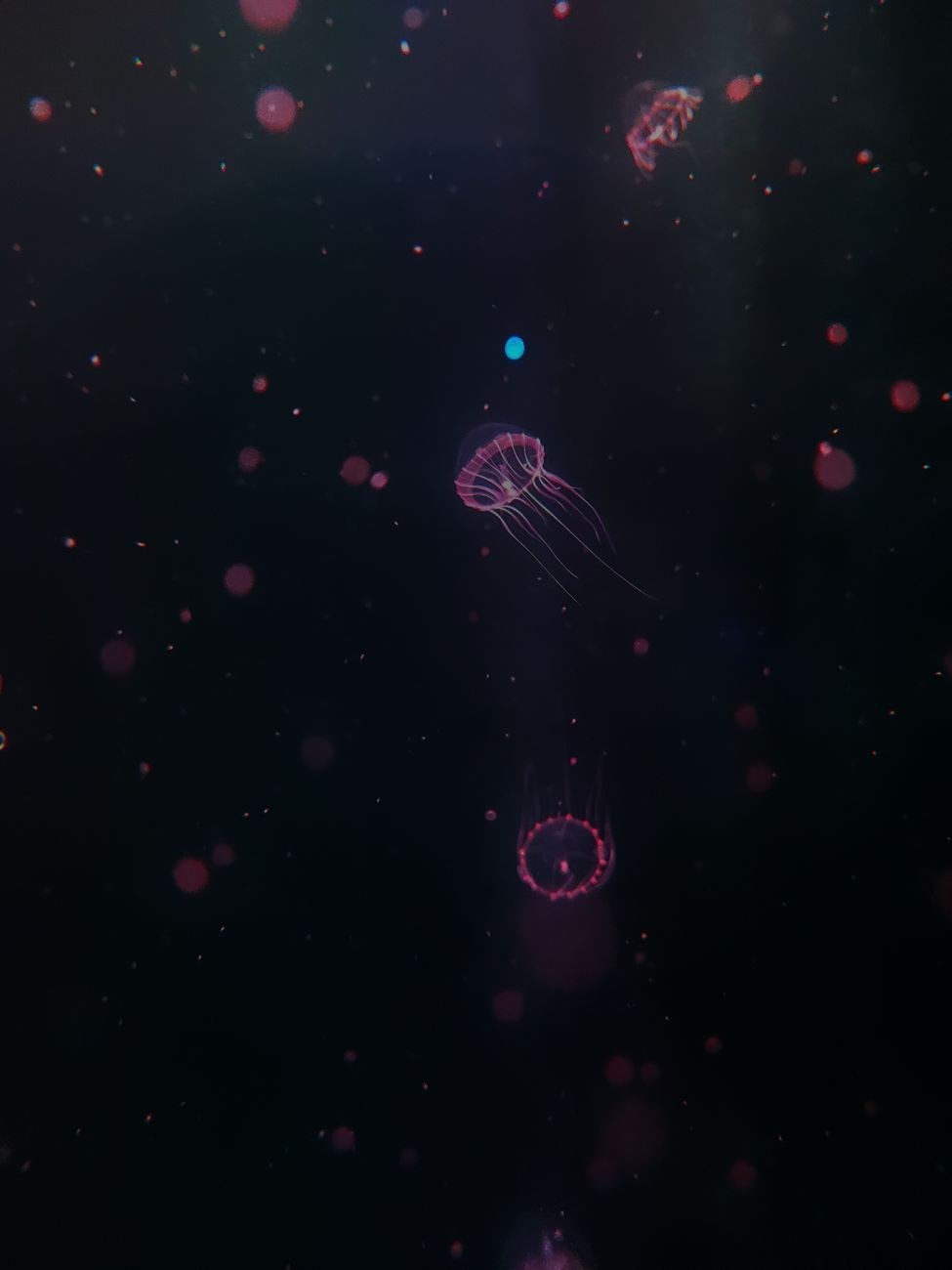
NOAA defines bioluminescence as the production and emission of light by a living organism, made with energy released from chemical reactions inside (or ejected by) the organism. The pages say glowing creatures live throughout marine habitats, from the surface to the deep seafloor, and that bioluminescence is not as rare in the ocean as you might think: the examples run from bacteria to sharks.
NOAA offers a familiar comparison: anyone who has seen a firefly has encountered a bioluminescent organism. The reasons for the sea’s version are less certain than the glow. NOAA says the functions are not known for every animal, but typically the light is used to warn or evade predators, to lure or detect prey, and for communication between members of the same species. A related effect gets a mention too. Some ocean organisms absorb light, transform it and eject it as a different colour, a phenomenon NOAA calls biofluorescence that may be used in communication and mating.
2. A mountain range that wraps the planet, mostly underwater
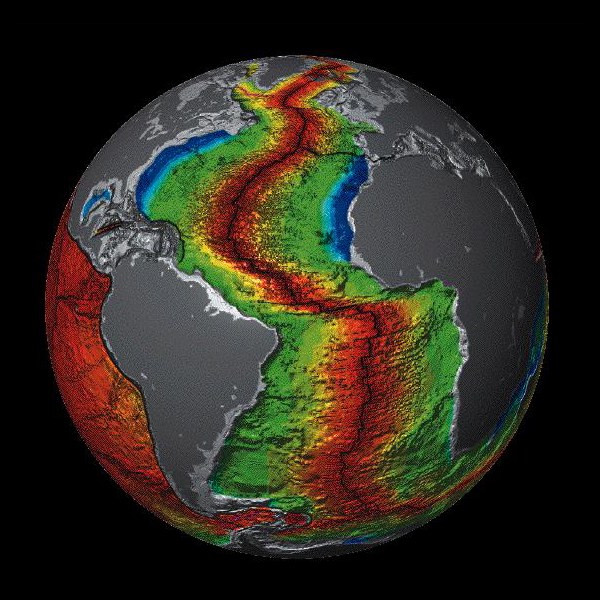
NOAA names the mid-ocean ridge as the longest mountain range on Earth, spanning 40,389 miles around the globe, and says the system looks like the stitches on a baseball. About 90 percent of it lies under the ocean. As tectonic plates push apart, magma rises to fill the gaps and new ocean floor is created, which NOAA says literally renews the surface of the planet.
The page adds that most of the world’s volcanoes form along the boundaries of this system, and that the mid-ocean ridge is the largest single volcanic feature on Earth. It consists of thousands of individual volcanoes or volcanic ridge segments that periodically erupt.
3. Challenger Deep, named after a ship
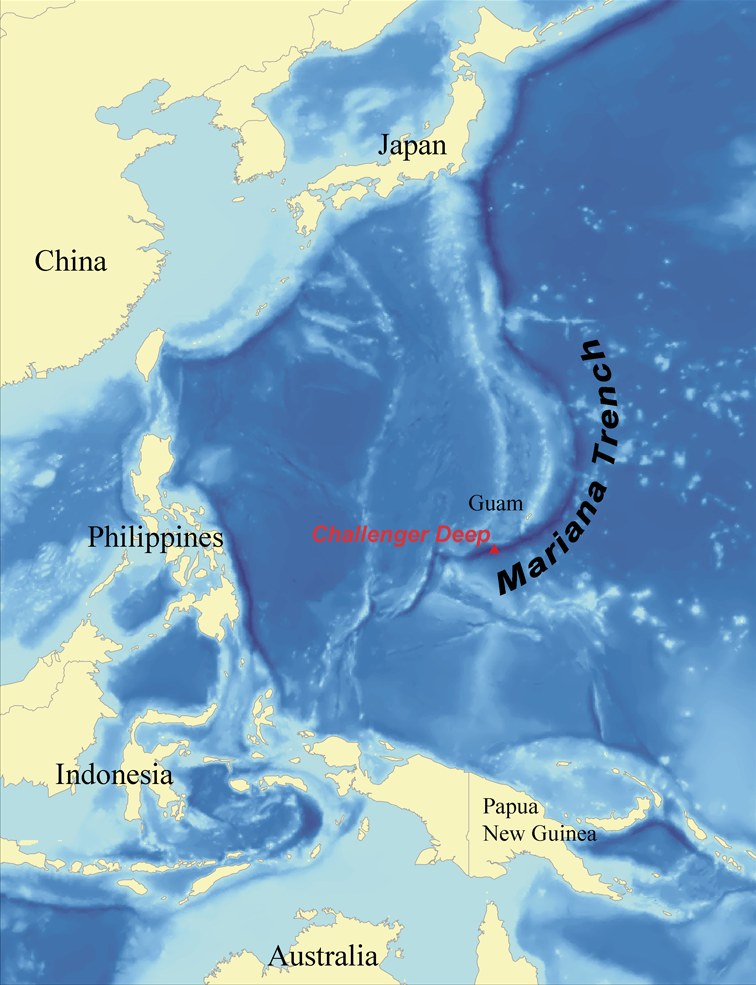
The average depth of the ocean is about 3,682 metres (12,080 feet), according to NOAA. The deepest part is called the Challenger Deep, at the southern end of the Mariana Trench beneath the western Pacific, several hundred kilometres southwest of the US territorial island of Guam. NOAA gives its depth as approximately 10,935 metres (35,876 feet).
The name comes from HMS Challenger, whose crew first sounded the depths of the trench in 1875. The same page carries a photo caption noting that active “smoker” hydrothermal vent chimneys about 9 metres tall have been found deep in the Mariana Arc region of the western Pacific.
4. Half of Earth’s oxygen, with a catch
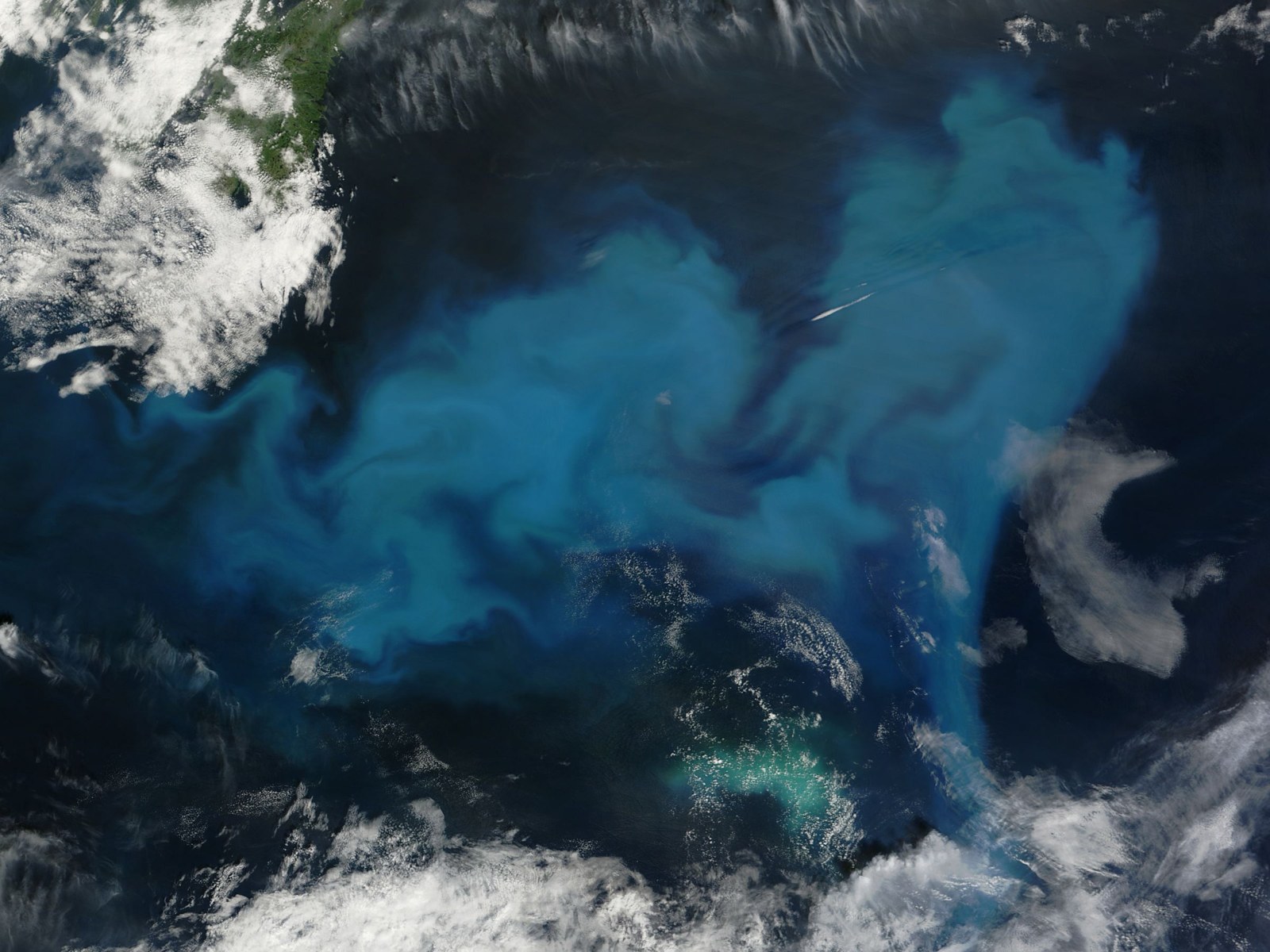
NOAA says about half of Earth’s oxygen comes from the ocean, and that about the same amount is consumed by marine life. Scientists estimate that roughly half of the oxygen produced on Earth comes from the ocean, mostly from plankton: drifting plants, algae and some bacteria that photosynthesise. Prochlorococcus, which NOAA calls the smallest photosynthetic organism on Earth, produces up to 20% of the oxygen in the entire biosphere, a higher percentage than all tropical rainforests on land combined.
NOAA also notes that marine animals use oxygen to breathe, that plants and animals both use it for cellular respiration, and that it is consumed when dead plants and animals decay in the ocean. Two cautions come from the same page. Calculating the exact percentage is difficult because the amounts keep changing, and NOAA says that as land animals, most of the oxygen humans breathe comes from the atmosphere, where it has accumulated over hundreds of millions of years.
5. How little of the seabed anyone has actually seen
NOAA Ocean Exploration says the ocean covers approximately 70% of Earth’s surface and is the largest livable space on the planet, with more life there than anywhere else on Earth. Its surface area is about 360 million square kilometres (139 million square miles). The whole seafloor has been mapped from satellite data, but those maps give only a general picture. As of April 2026, 28.7% of the global seafloor had been mapped with modern high-resolution technology such as multibeam sonar.
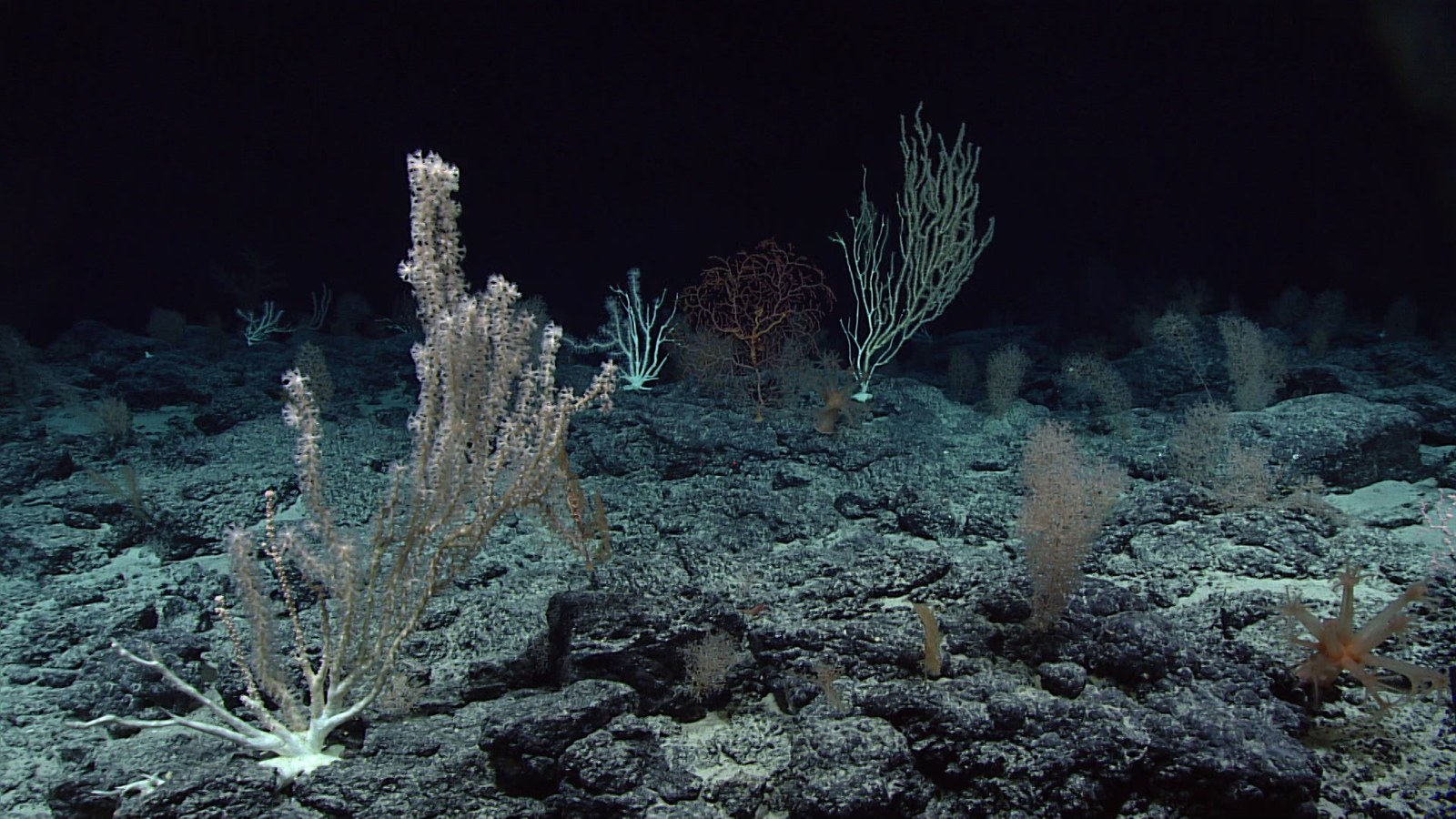
Seeing is a higher bar than mapping. NOAA says explorers have seen less than 0.001% of the deep-ocean seafloor, roughly the size of Rhode Island, and that more than 90% of the ocean is deep ocean, deeper than 200 metres (656 feet). Scientists estimate there may be between 700,000 and 1 million species in the ocean, mostly animals and excluding most microorganisms. Roughly two-thirds of them, possibly more, have yet to be discovered or officially described, with almost 2,000 new species accepted each year. NOAA adds that progress is being made every year, but that the ocean will never be fully explored because Earth is constantly changing.
The bottom line
NOAA’s pages describe an ocean that glows, hosts the longest mountain range on Earth, reaches about 10,935 metres at its deepest point and supplies about half of Earth’s oxygen. The same pages also set the limits of what is known: the oxygen figure is an estimate, and less than 0.001% of the deep-ocean seafloor has been seen.
Sources
- What is bioluminescence?, NOAA National Ocean Service, page dated 23 September 2026, read 27 October 2026 (oceanservice.noaa.gov)
- What is the longest mountain range on Earth?, NOAA National Ocean Service, page dated 23 September 2026, read 27 October 2026 (oceanservice.noaa.gov)
- How deep is the ocean?, NOAA National Ocean Service, page dated 23 September 2026, read 27 October 2026 (oceanservice.noaa.gov)
- How much oxygen comes from the ocean?, NOAA National Ocean Service, page dated 23 September 2026, read 27 October 2026 (oceanservice.noaa.gov)
- How much of the ocean has been explored?, NOAA Ocean Exploration, last updated 20 April 2026, read 27 October 2026 (oceanexplorer.noaa.gov)