
Carnivorous plants catch animals in very different ways, and the researchers who measure them report speeds from none at all to half a millisecond. Five mechanisms follow, from passive pitfalls to rapid suction, with movement times given where the cited research reports them. Every page was read on 27 October 2026.
The pitfall: no movement at all
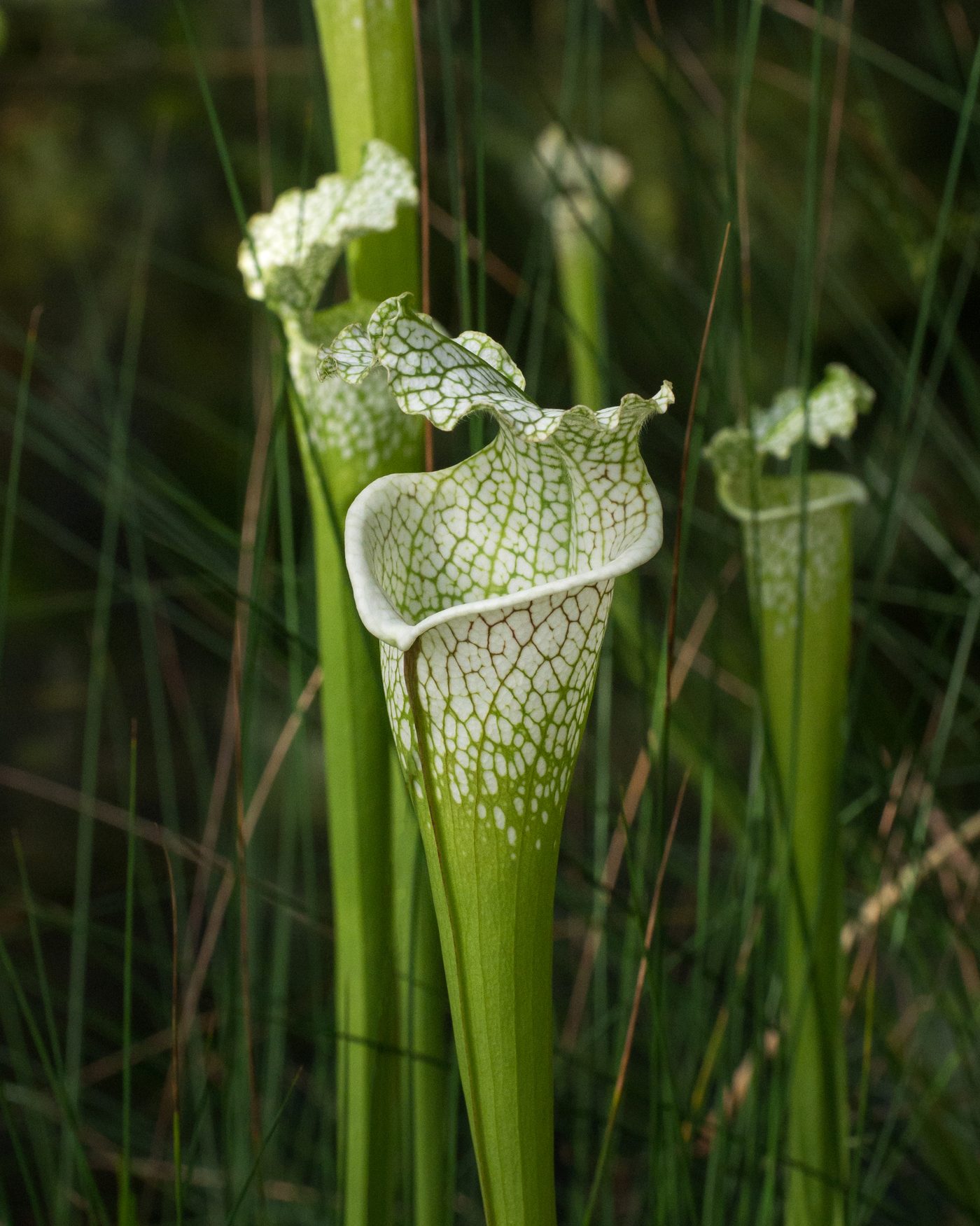
The National Park Service page for Big Thicket National Preserve calls pitcher plants passive plants that do not use movement to capture or digest insects. It says they lure insects to the mouth of the trap with colour, nectar or scent. An insect that enters meets a waxy inner surface that makes it slide down the funnel, and downward-pointing hairs on the lower part impede its climb out. The bottom of the pitcher holds a fluid that drowns the insect and, because it contains digestive enzymes, breaks down its proteins and soft parts, leaving only the exoskeleton. The page adds that carnivorous plants often grow in the nutrient-poor soils of wetland pine savannah, and that although they can conduct photosynthesis, they get most of their nutritional needs from the fluids and soft body parts of the insects they consume.
The flypaper: sticky and slow
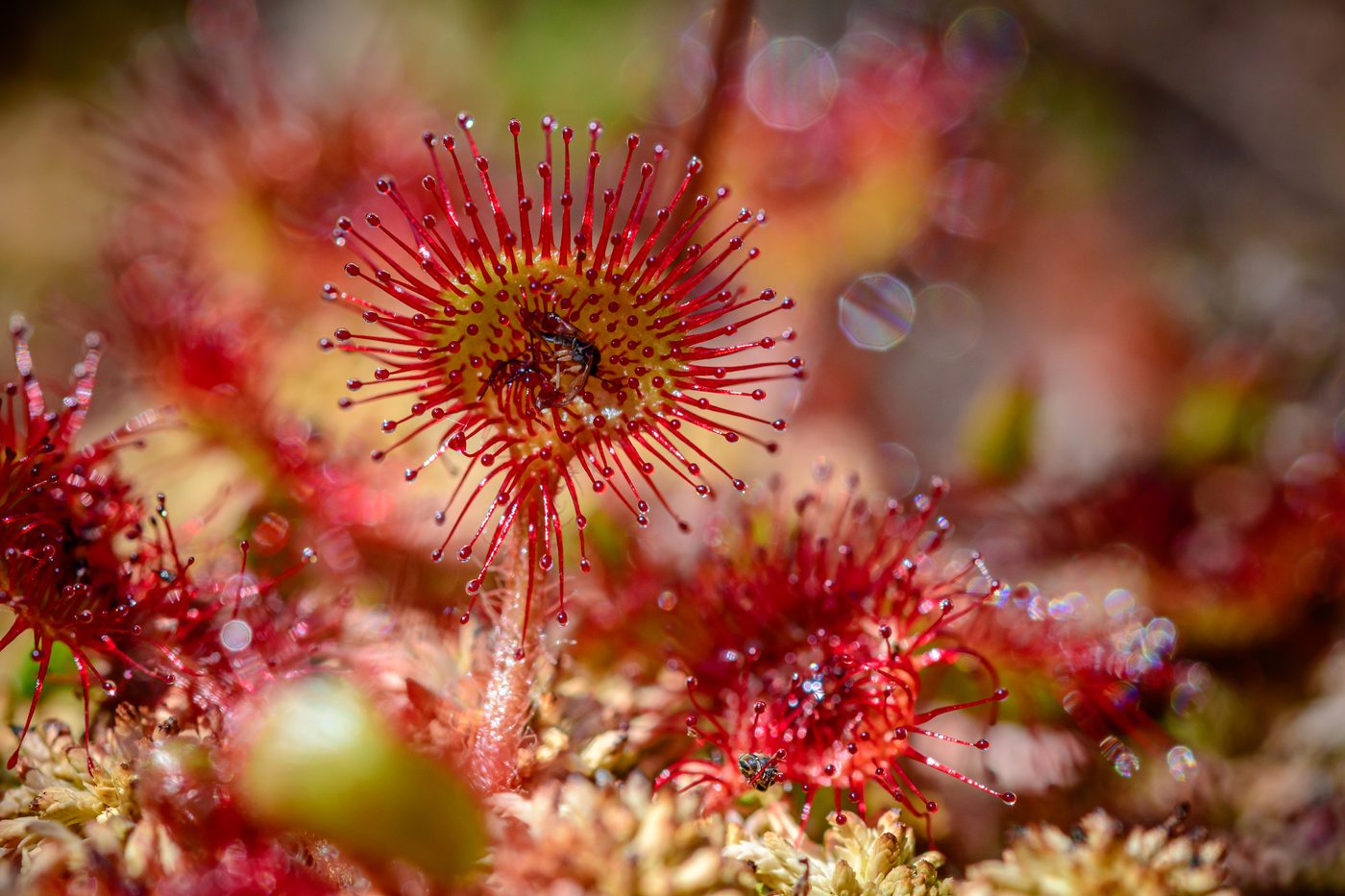
The same NPS page describes the pink and dwarf sundews of Big Thicket as small herbs with tentacle stalks, each tipped with a gland that secretes a droplet of fluid. Insects become stuck to the mucilage, and once the plant feels the insect struggling it slowly encloses it with the tentacles. Within minutes the plant begins to secrete digestive enzymes and acids, and glands then absorb the liquefied insect. A 2012 paper in PLoS ONE adds that in many sundew species the leaf blade can bend slowly to enfold stuck prey, which can take from several minutes up to several hours.
The snap trap: two touches, or one
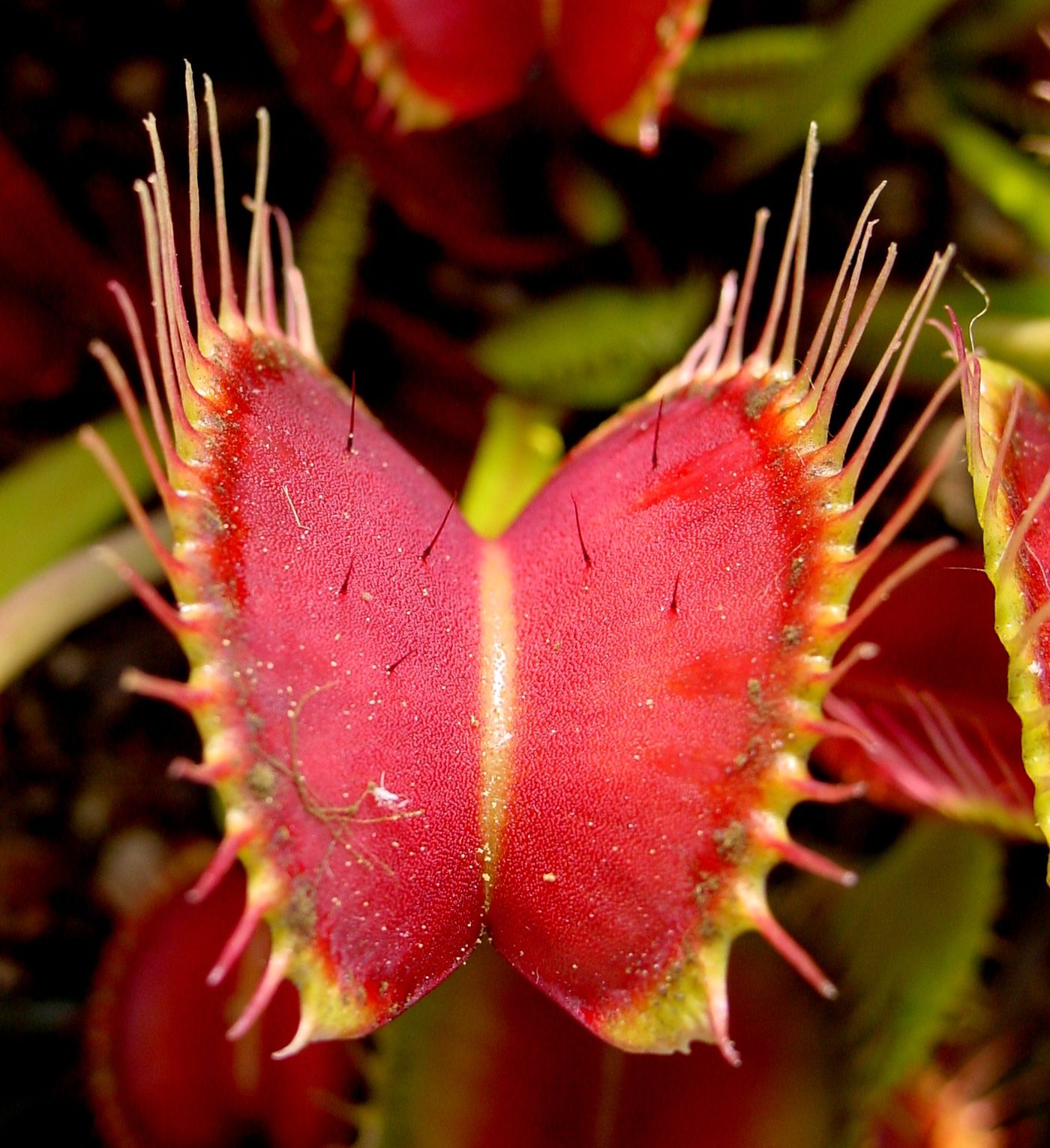
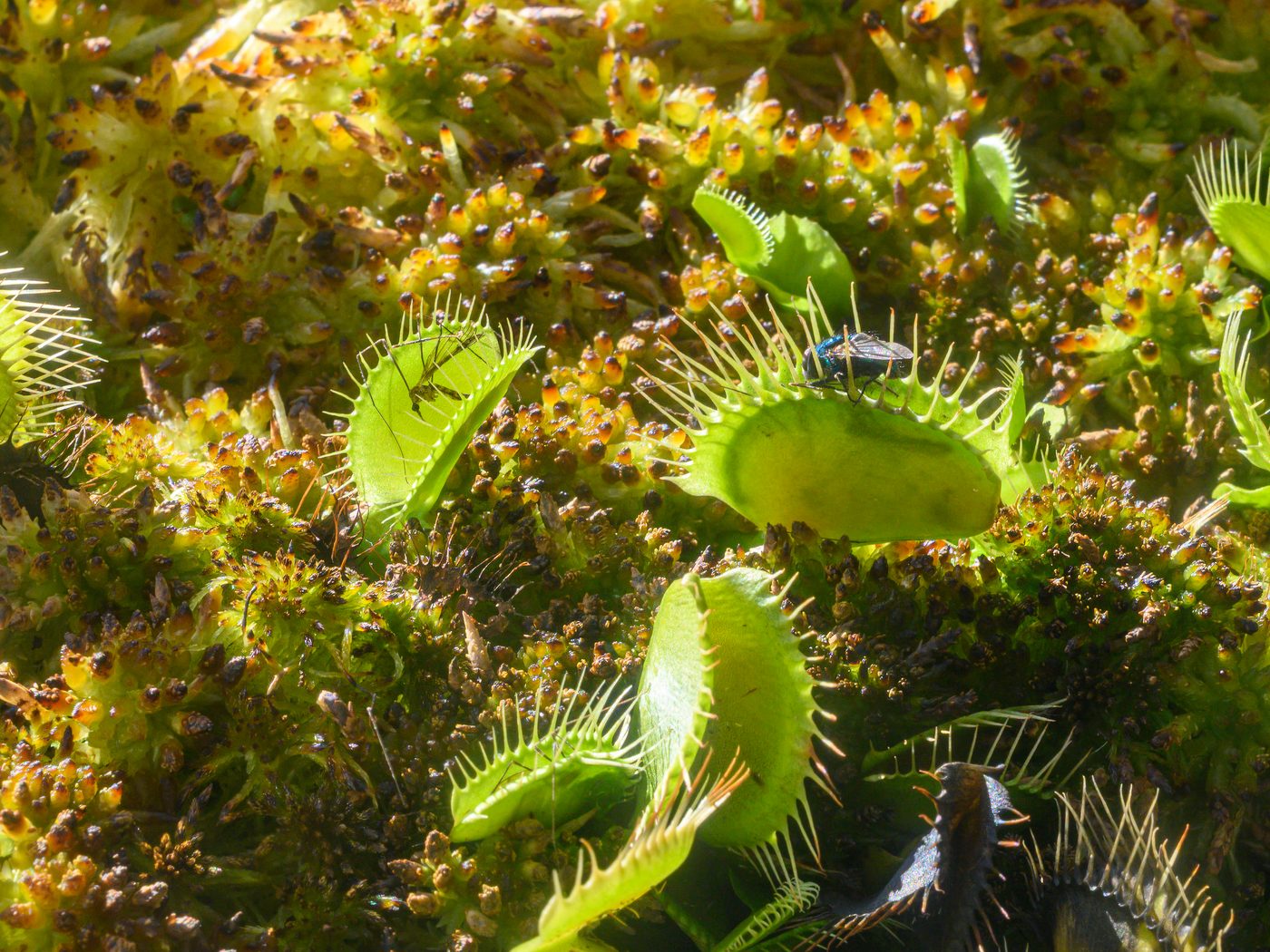
The Venus flytrap, according to NPS, is native to the coastal plains of North Carolina and South Carolina. A 2020 paper in PLoS Biology says it is generally accepted that two touches of the trap’s sensory hairs within 30 seconds are required to trigger closure, each producing an action potential. The authors’ model and measurements with a force-sensing microrobotic system suggest that under certain circumstances one touch is sufficient, so the plant may be adapted to a wider range of prey movements than previously assumed. A 2015 review in AoB Plants puts the snapping of the Venus flytrap at about 100 milliseconds.
The catapult: a sundew that flicks its prey
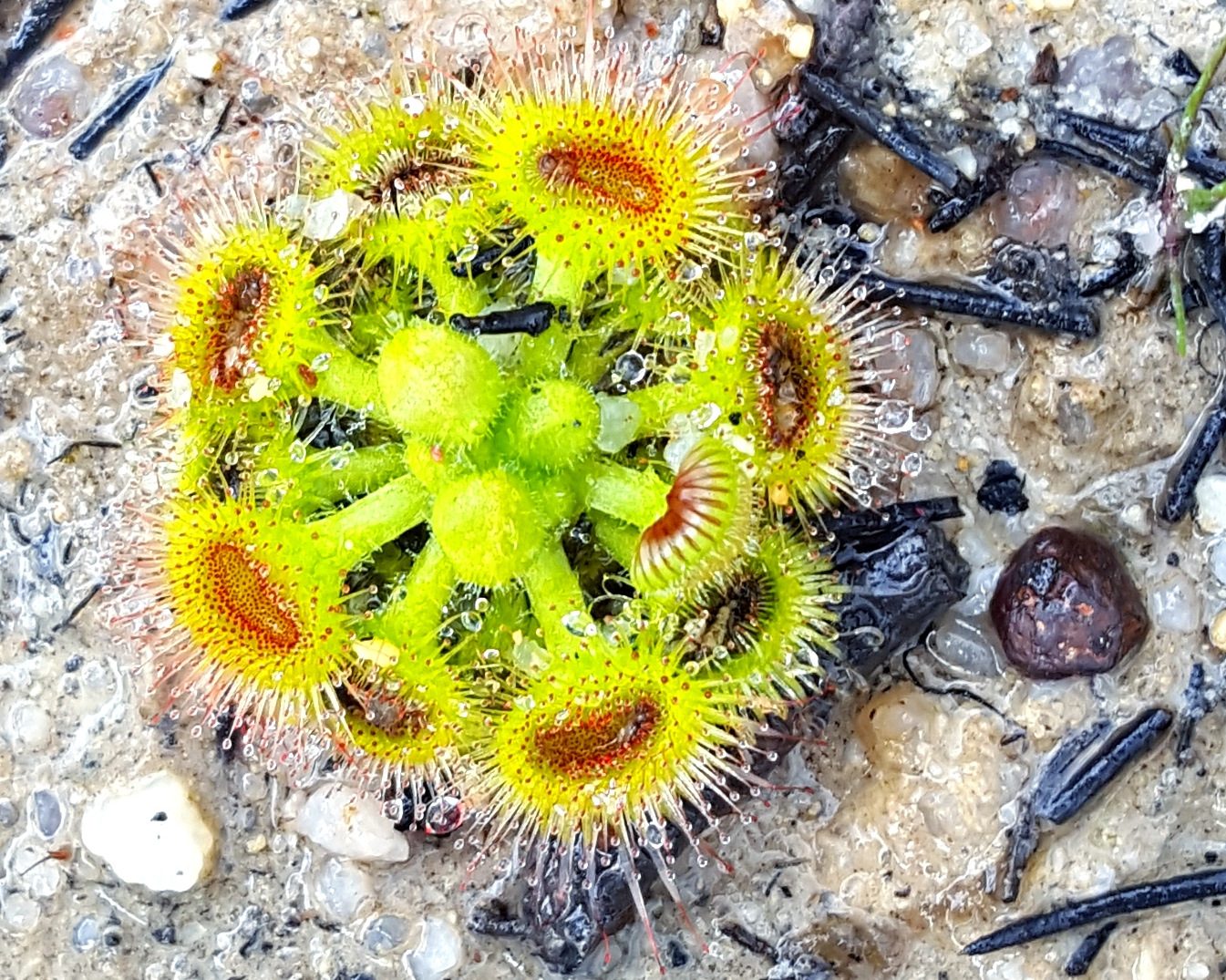
Drosera glanduligera, a sundew from southern Australia, adds a mechanism to the flypaper design. According to the 2012 PLoS ONE paper, prey walking near the edge of the leaf triggers a touch-sensitive snap-tentacle that swiftly catapults the animal onto adjacent sticky glue-tentacles, and the insects are then slowly drawn into the concave trap leaf. The 2015 review gives the catapult movement as taking 75 milliseconds. The 2012 authors call it the first detailed documentation of such catapult-flypaper traps in action.
The suction trap: half a millisecond
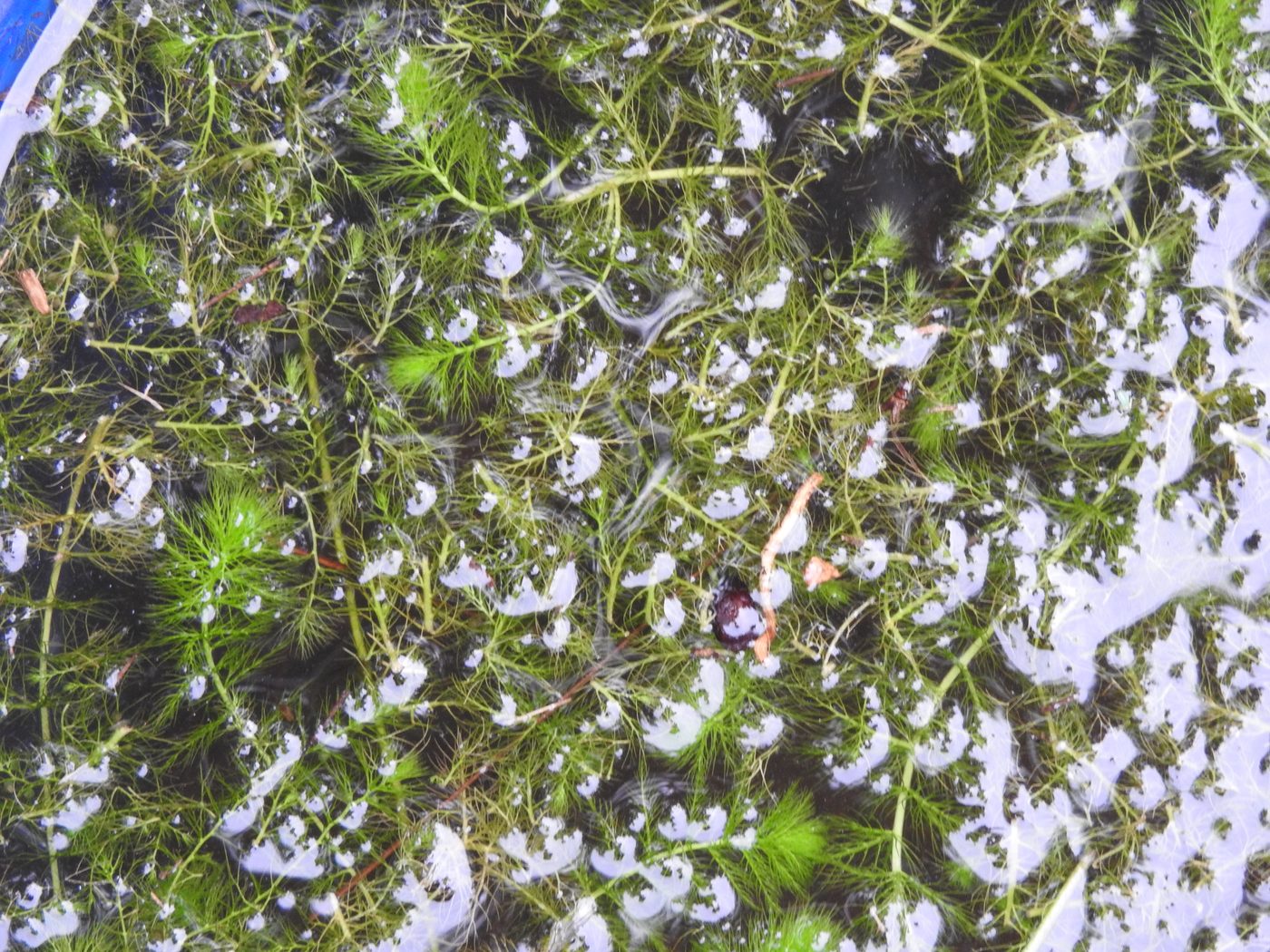
NPS says bladderworts are the biggest genus of carnivorous plants, with over 220 species worldwide, and that their underwater leaves bear small bladders. Tiny hairs at the opening are sensitive to the motion of passing organisms such as water fleas, and when stimulated they cause the flattened bladder to suddenly inflate, sucking in water and the animal and closing a trap door behind it. NPS adds that bladderworts are usually found in quiet, shallow, acidic waters and can form dense mats. The 2015 AoB Plants review reports capture lasting about half a millisecond, and calls the genus Utricularia by far the fastest carnivorous plant in trap movement duration. In Utricularia inflata, it says, measurements found that fluid inside the aspiration zone near the trapdoor accelerated at up to 600 g and reached a top speed of about 1.5 metres per second.
The bottom line
The pages and papers describe five different solutions to the same problem: a passive pitfall, a slow flypaper, a snap trap, a catapult and a suction trap. The speeds quoted are the researchers’ own figures for particular species, and the Venus flytrap’s two-touch rule is described as generally accepted, but not the only way a trap can close.
Sources
- Carnivorous Plants, National Park Service, Big Thicket National Preserve, last updated 13 April 2026, read 27 October 2026 (nps.gov)
- Catapulting Tentacles in a Sticky Carnivorous Plant, Poppinga and others, PLoS ONE 7(9): e45735, 2012, read 27 October 2026 (pmc.ncbi.nlm.nih.gov)
- A single touch can provide sufficient mechanical stimulation to trigger Venus flytrap closure, Burri and others, PLoS Biology 18(7): e3000740, 2020, read 27 October 2026 (pmc.ncbi.nlm.nih.gov)
- Fastest predators in the plant kingdom: functional morphology and biomechanics of suction traps found in the largest genus of carnivorous plants, Poppinga and others, AoB Plants 8: plv140, 2015, read 27 October 2026 (pmc.ncbi.nlm.nih.gov)