
One folds itself into a wheel. Another glides through water like a jellyfish. A third takes flight on flexible bat-like wings. These five machines make engineering feel unexpectedly alive—and the footage shows real manufacturer demonstrations, not invented creatures.
1. BionicWheelBot: the spider that turns into a wheel
Where: Festo, Esslingen am Neckar, Germany; developed with Professor Ingo Rechenberg’s team in Berlin
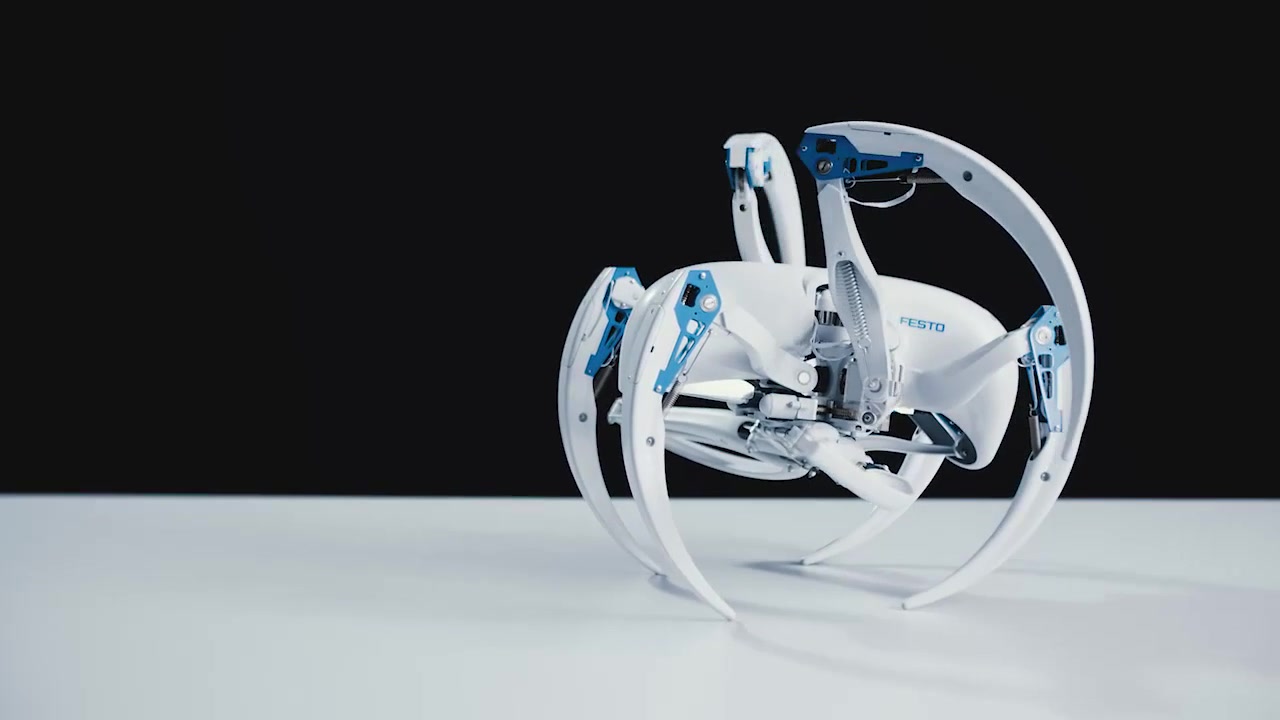
Most robots choose one way to get around. This one changes its mind—or, more precisely, its shape. The BionicWheelBot can walk on six legs, then fold three legs on each side into a wheel-like form. Two additional legs push the curled-up body forwards as it rolls.
Its inspiration is a real cartwheeling spider. Festo developed the research robot with the team of Professor Ingo Rechenberg, who studied the spider’s unusual movement. The result borrows a biological trick rather than simply adding conventional wheels to a walking machine.
Watch the transition in our video. Those curved parts are legs doing a second job, and the whole body goes along for the ride.
Official information: festo.com/gb/en/e/about-festo/research-and-development/bionic-learning-network/bionic-walking-robots/bionicwheelbot-id_32767.
2. Menzi Muck: the excavator with a spider-like stance
Where: Menzi Muck AG, Rüthi, Switzerland
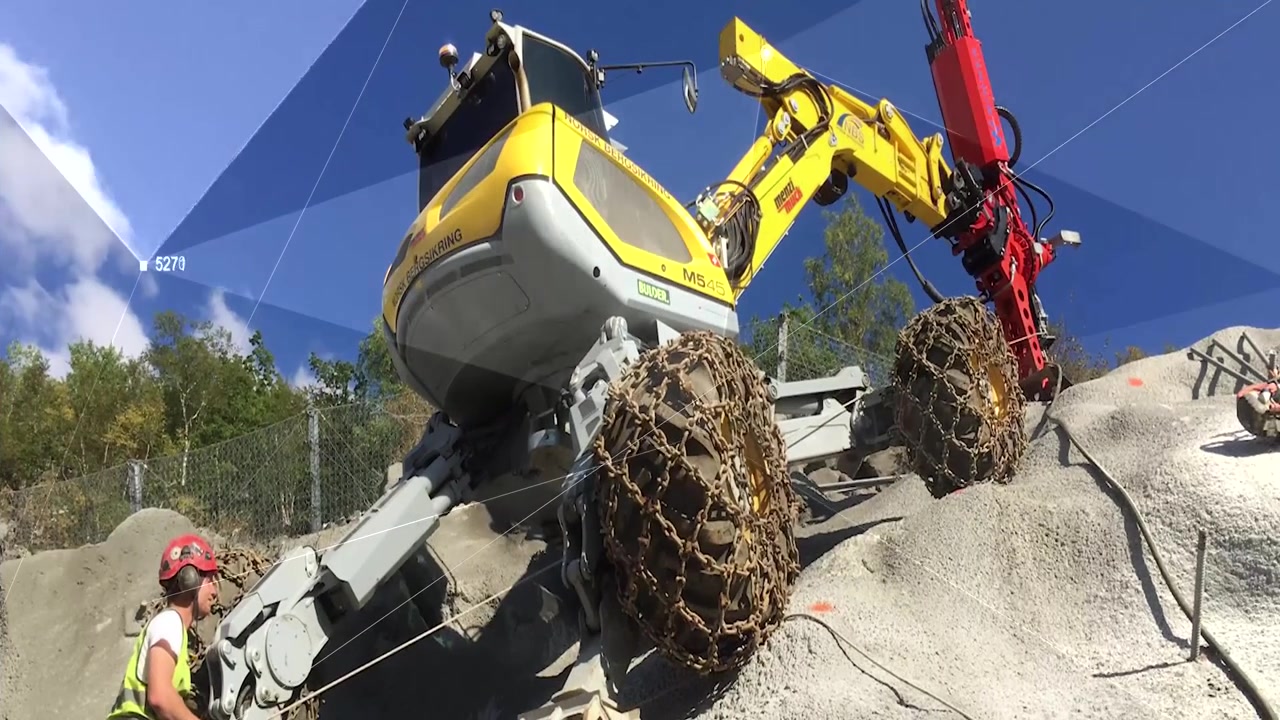
A normal excavator is impressive enough. Give it an adjustable, leg-like undercarriage and put it on difficult terrain, and suddenly it looks like a giant mechanical creature.
Menzi Muck’s walking excavators use articulated supports and wheels to adapt their stance. The Swiss manufacturer builds machines for demanding conditions, including steep slopes where positioning and stability matter. The footage shows several of its machines at work rather than a single model performing every task.
The striking part is how differently the machine can sit against the ground. Its body, digging arm and supports form a purposeful working system, even when the overall shape looks unlike the excavator you would expect on a building site. It is operated equipment, not a claim of an autonomous robotic animal.
Official information: menzimuck.com/en/product/walking-excavator/menzi-muck-m5x.
3. BionicMotionRobot: a robot arm that curves like a living limb
Where: Festo, Esslingen am Neckar, Germany

Forget a rigid metal arm with a few obvious hinges. The BionicMotionRobot bends along flexible sections, giving it a movement that feels closer to a trunk or tentacle.
Its three main segments each use four pneumatic bellows. By controlling those air-powered structures, the research arm can bend in several directions. Special fabric around the bellows helps control how they expand, drawing on the arrangement of fibres in an octopus’s tentacles.
This is a bionic research demonstrator from Festo, not a household robot you can simply buy from this article. Its appeal is the engineering idea: useful motion can come from a flexible body, rather than a chain of stiff parts.
Official information: festo.com/gb/en/e/about-festo/research-and-development/bionic-learning-network/bionic-grippers-and-soft-robots/bionicmotionrobot-id_33307.
4. AquaJelly: glowing robotic jellyfish
Where: Festo, Esslingen am Neckar, Germany

The blue light and floating movement make these look like creatures from a strange aquarium. Look inside the transparent bodies, though, and the machinery becomes clear.
Festo’s AquaJellies use electrically driven, tentacle-like structures to move through water. The research explores how individual machines can use sensing and communication to behave as a coordinated group.
Our clip comes from the manufacturer’s 2008 AquaJelly film. Festo later developed AquaJellies 2.0, so we are deliberately showing an earlier demonstration rather than claiming this is a brand-new invention. The enduring surprise is the movement: a recognisably mechanical structure can still glide with an animal-like rhythm.
Official information: festo.com/gb/en/e/about-festo/research-and-development/bionic-learning-network/bionic-swimming-robots/aquajellies-2-0-id_33601.
5. BionicFlyingFox: a machine with bat-like wings
Where: Festo, Esslingen am Neckar, Germany
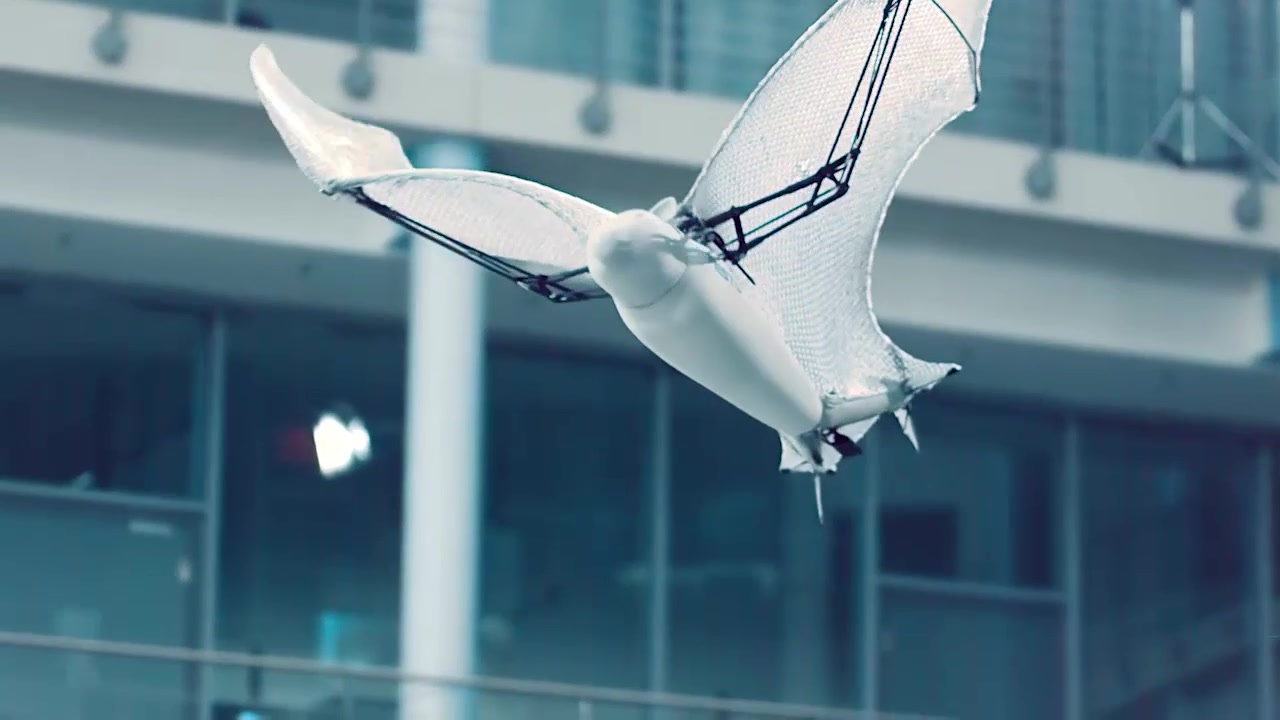
The final machine leaves the ground. BionicFlyingFox uses a flexible membrane stretched across articulated wings, borrowing its basic form from a flying fox—a type of bat.
Its wingspan is 2.28 metres, yet Festo reports a weight of just 580 grams. The wings can change their shape, making its flight look very different from a rigid-wing aircraft or a familiar quadcopter.
There is a support system behind the spectacle. External cameras track the robot within a defined space, and an autopilot takes over during flight. A human handles launch and landing. That makes it a semi-autonomous research demonstration, not a fully independent robotic bat roaming outside. Watch the wingbeat: it is the detail that makes the machine seem alive.
Official information: festo.com/gb/en/e/about-festo/research-and-development/bionic-learning-network/bionic-flying-objects/bionicflyingfox-id_32755.
Which movement surprised you most: the rolling spider, the flexible arm, or those robotic wings?
Watch the full video below
See all five machines in our 72-second tour, with each machine named so you can explore further.