
Some animal structures are measured the way engineers measure buildings. Here are five, each placed where it stands, with the size or record exactly as the source gives it. Where a source says “about” or “up to”, so does this article. All pages were read on 27 October 2026.
Over a Madagascan river: bridge lines of up to 25.5 metres
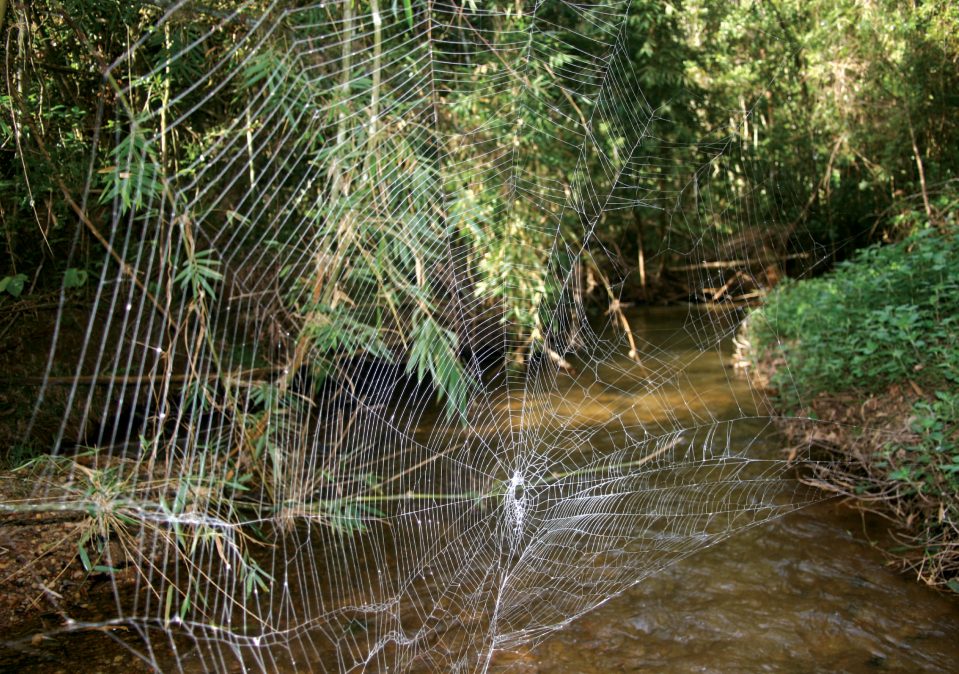
Darwin’s bark spider, Caerostris darwini, hangs orb webs over water. A 2011 Journal of Arachnology study by Todd Blackledge, Matjaž Gregorič, Ingi Agnarsson and Matjaž Kuntner compared several Caerostris species and found C. darwini the most extreme case of web gigantism, with the largest orbs up to 2.76 square metres and the longest bridge lines reaching 25.5 metres. The abstract adds that few lineages have evolved orb webs larger than 1 metre in diameter, and that the silk’s toughness outperforms all other known spider silks.
The authors call their data preliminary, but suggest the webs are effective snares for semi-aquatic insects such as mayflies and dragonflies. Vertebrate prey were never observed.
In north-eastern Brazil: 200 million mounds from one termite species
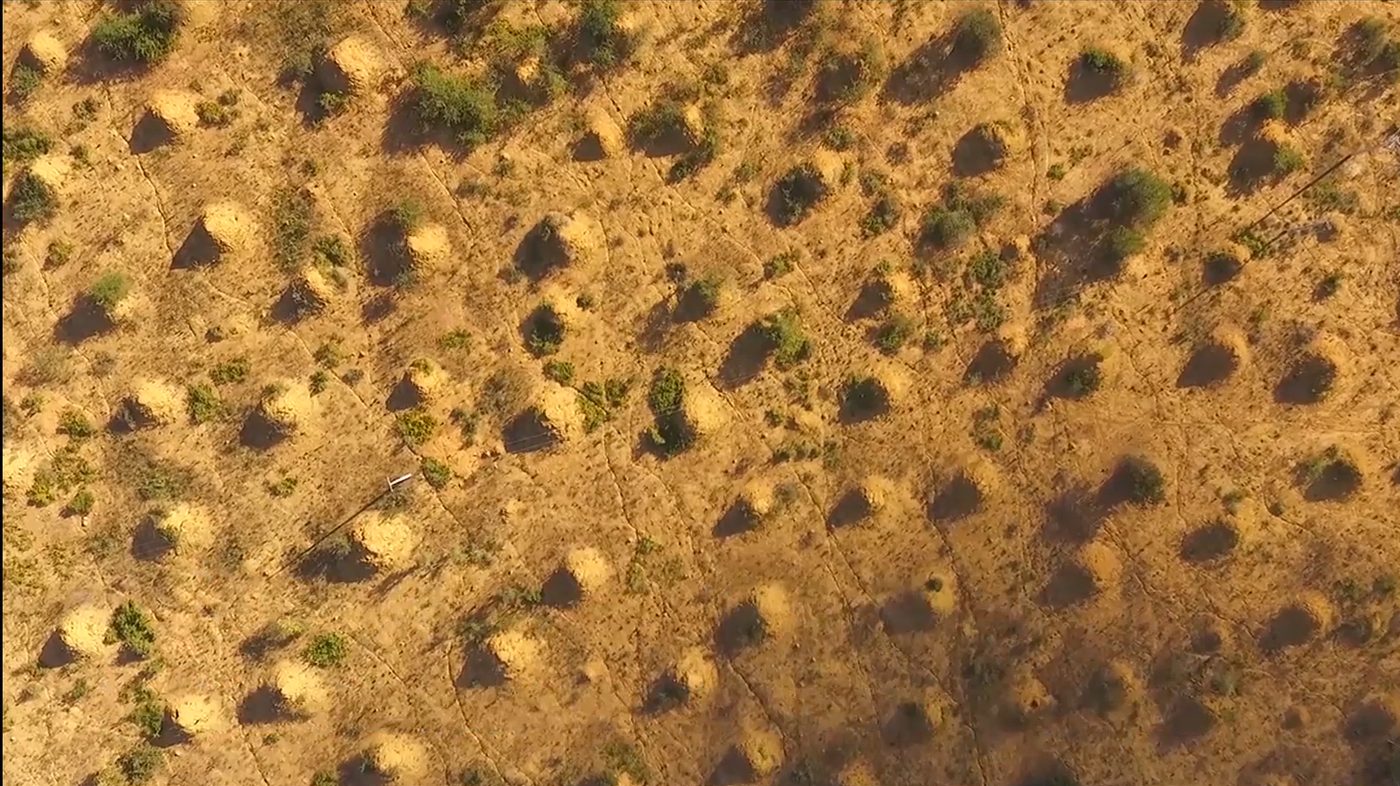
A Current Biology study reported by Cell Press in November 2018 described a vast array of regularly spaced, still-inhabited termite mounds in north-eastern Brazil, covering an area the size of Great Britain. There are approximately 200 million cone-shaped mounds, each about 2.5 metres tall and 9 metres across. They are not nests: they are the result of the insects’ slow excavation of interconnected underground tunnels. Soil from the centres of 11 mounds was dated to between 690 and 3,820 years ago.
Stephen Martin of the University of Salford said the soil excavated is over 10 cubic kilometres, equivalent to 4,000 great pyramids of Giza. Roy Funch, of Universidade Estadual de Feira de Santana, called it apparently the world’s most extensive bioengineering effort by a single insect species.
On a Kalahari acacia: a nest that can weigh a ton or more
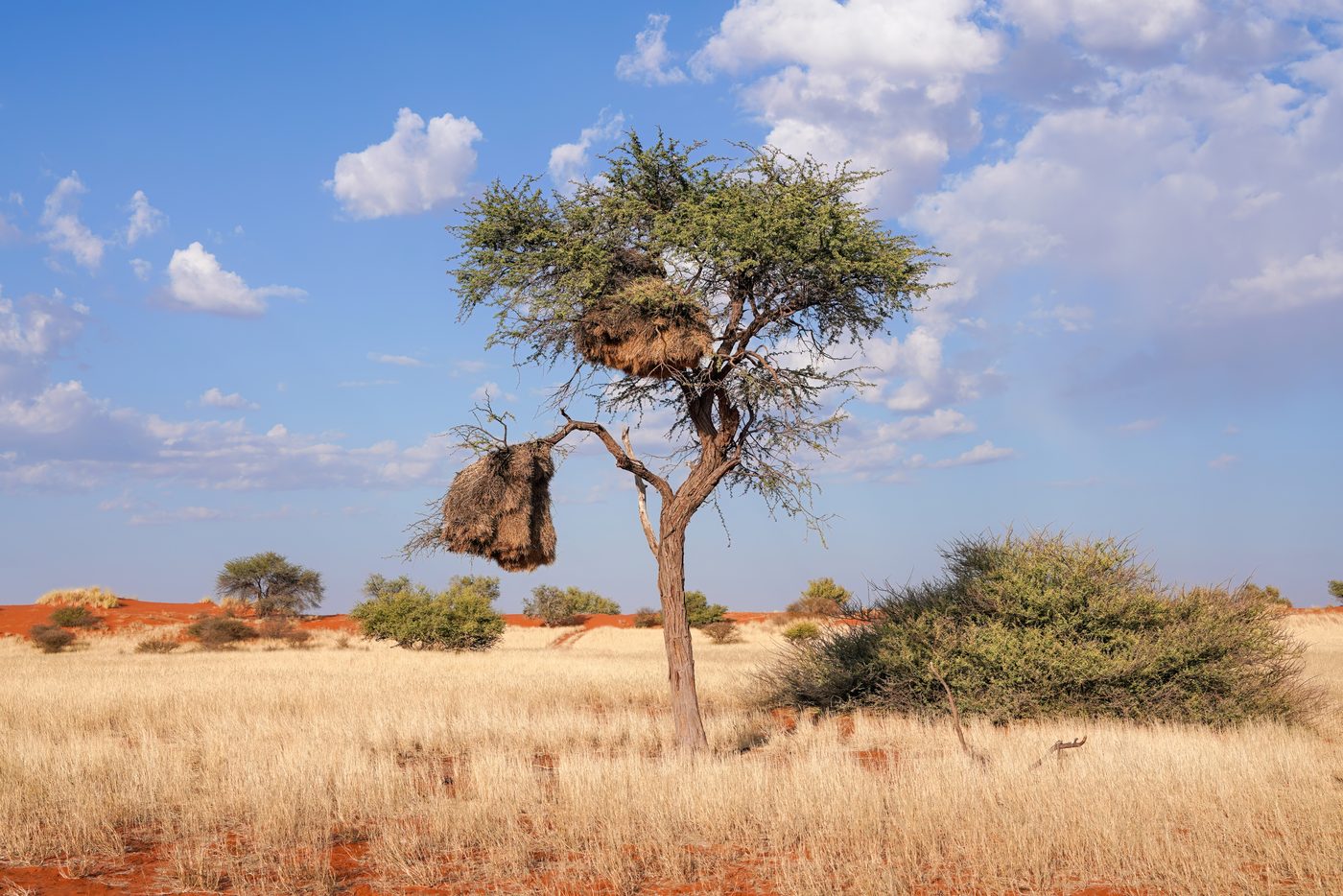
Writing in Audubon magazine, author Bernd Heinrich describes the sociable weavers of the Namib and Kalahari deserts as building the world’s largest and most populated tree houses. He gives their weight as up to a ton or more and their size as up to 20 feet wide and 10 feet tall, with a hundred or more nesting chambers. The nests are refurbished and reused, he says, often for more than a century.
A 2020 study in Frontiers in Ecology and Evolution, on colonies in the Kalahari in South Africa, found that they provide thermal benefits throughout the year, buffering both hot and cold ambient extremes.
On an Australian forest floor: a bower that is not a nest
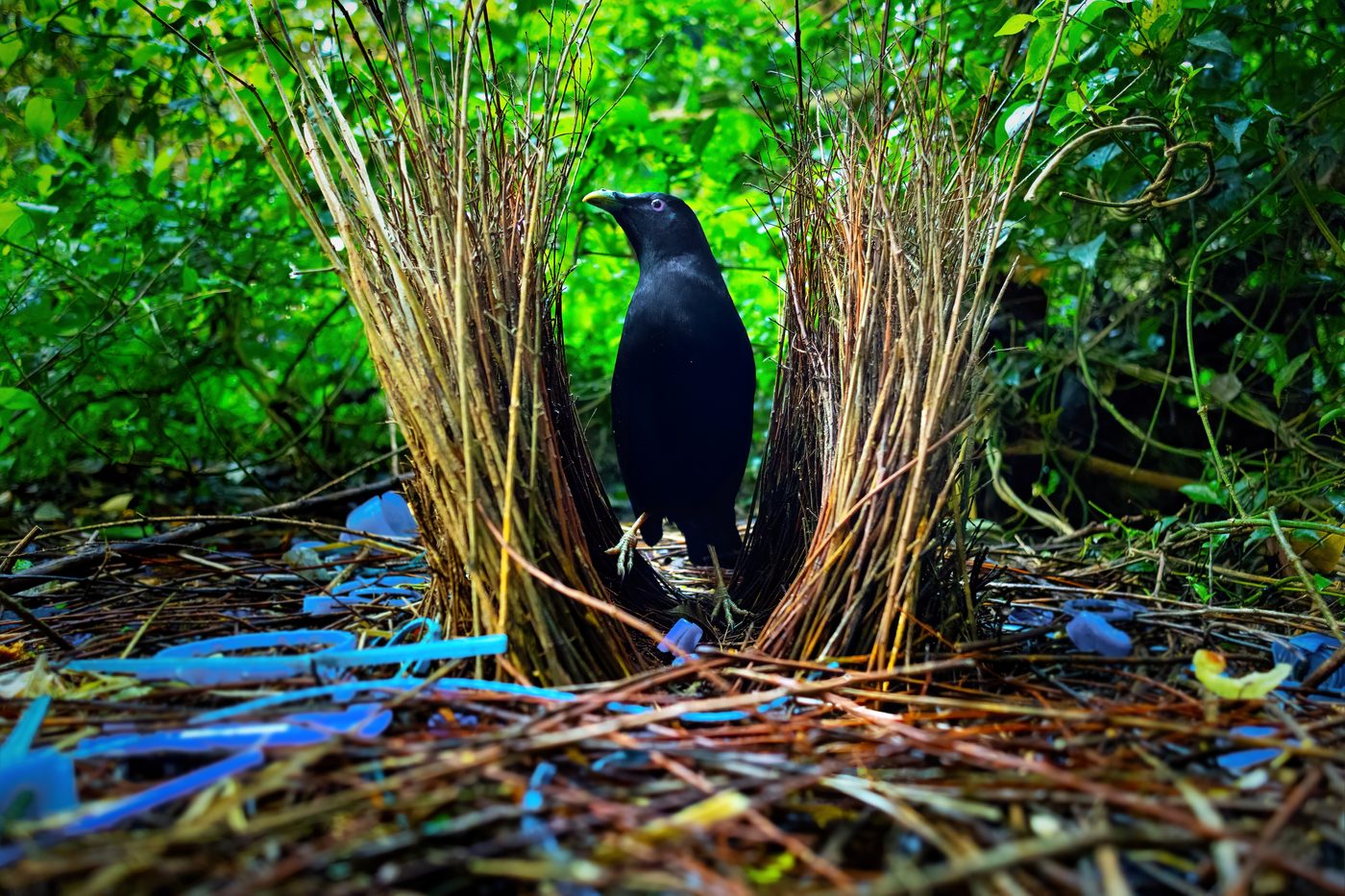
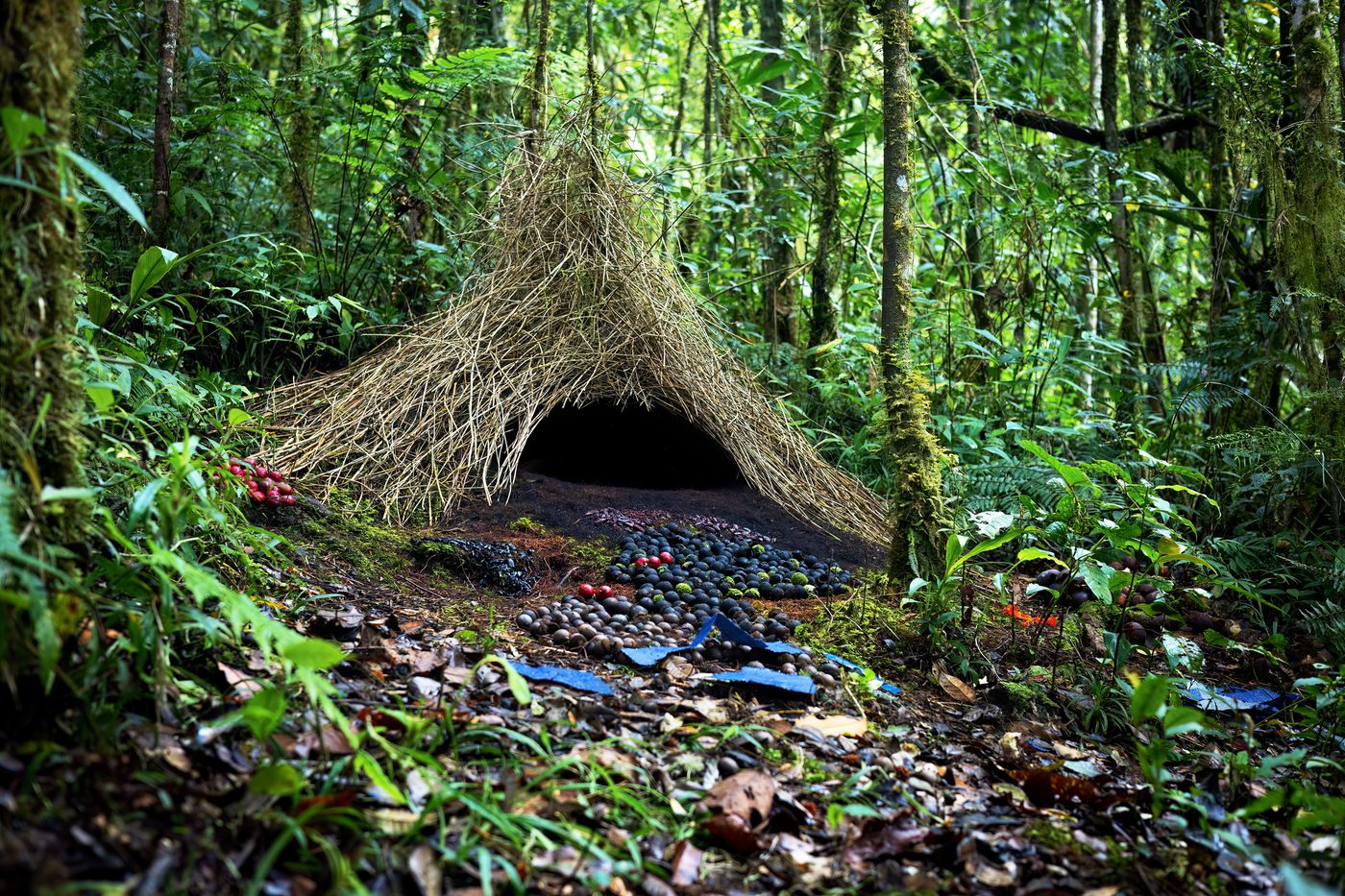
The NSW Government says a bowerbird’s bower is not a nest but an “avenue” used by males to entice a female; only the female builds a nest. The male satin bowerbird’s bower is an avenue of twigs and sticks woven into walls, usually painted with a mixture of charcoal and saliva, with platforms at both ends decorated mainly with blue objects such as flowers, feathers and berries. When humans are nearby, the birds also use plastic items such as clothes pegs.
A 2013 Australian Field Ornithology study of great bowerbirds near Darwin found decorations mainly of snail shells, stones, pieces of glass and cycad fruits. After decorations were experimentally removed from five bowers, the owners placed them back in a configuration similar to the one before removal.
In Wood Buffalo National Park: a dam of about 800 metres
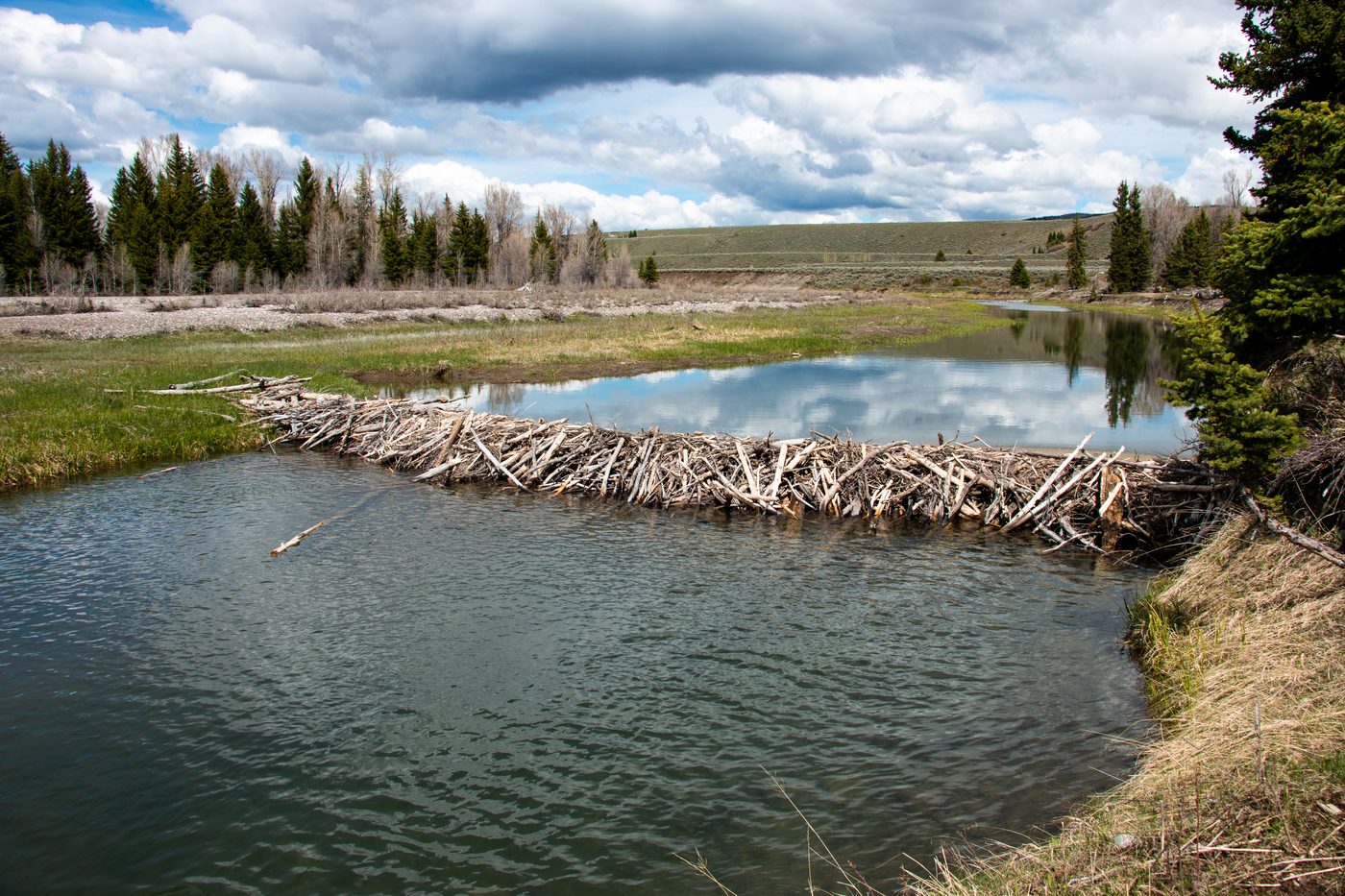
NASA describes a beaver dam in Wood Buffalo National Park, Canada, as considered the world’s largest, measuring approximately 800 metres (2,600 feet) long, and says it was identified by studying Landsat imagery. NASA adds that most engineering marvels on Earth that are visible from space are made by humans, but beavers have also proved capable of feats on this scale.
The same page says other large dams exist in the area, according to analysis by Canadian ecologist Jean Thie, and that image archives indicate the largest one was constructed in the 1980s.
The bottom line
The five builders have little in common except a published measurement: a web line, a mound field, a roost, a display ground and a dam. Their numbers come from different kinds of sources, from a journal abstract to a magazine essay to a space agency’s image page, so each is given here with its source rather than ranked against the others.
Sources
- Darwin’s Bark Spider: Giant Prey in Giant Orb Webs (Caerostris darwini, Araneae: Araneidae), Blackledge, Gregorič, Agnarsson and Kuntner, The Journal of Arachnology 39, Fall 2011, University of Akron repository record, read 27 October 2026 (ideaexchange.uakron.edu)
- 4,000-year-old termite mounds found in Brazil are visible from space, Cell Press release, ScienceDaily, 20 November 2018, read 27 October 2026 (sciencedaily.com)
- Africa’s Social Weaverbirds Take Communal Living to a Whole New Level, Bernd Heinrich, Audubon Magazine, March-April 2014, read 27 October 2026 (audubon.org)
- The Large Communal Nests of Sociable Weavers Provide Year-Round Insulated Refuge for Weavers and Pygmy Falcons, Lowney et al., Frontiers in Ecology and Evolution, 3 November 2020, read 27 October 2026 (frontiersin.org)
- Bowerbirds, NSW Government Environment and Heritage, read 27 October 2026 (environment.nsw.gov.au)
- Preference for, and spatial arrangement of, decorations of different colours by the Great Bowerbird, Katsuno, Eguchi and Noske, Australian Field Ornithology 30(1), 2013, read 27 October 2026 (afo.birdlife.org.au)
- Where the Wood Bison Roam, NASA Science (Earth Observatory image story), undated page, read 27 October 2026 (science.nasa.gov)