
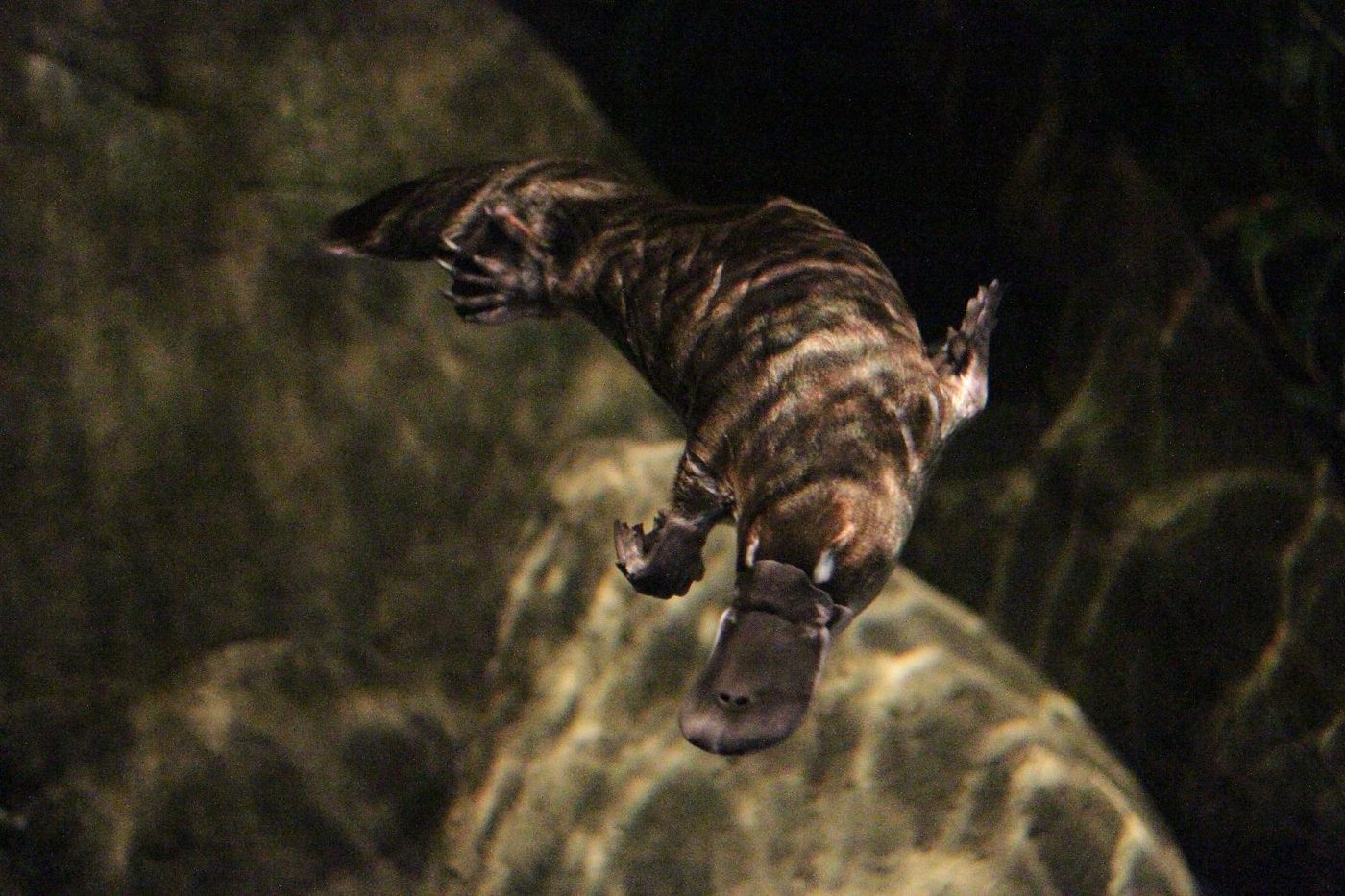
Shine an ultraviolet torch on some animals and they light up in colours that daylight hides. Five cases are covered below, using the reports and studies that describe them, and each section says what its own source says the glow is for. The short version from the sources: the purpose is mostly unknown. All pages were read on 27 October 2026.
First, three words that get mixed up
- Biofluorescence: National Geographic describes it as a substance, such as fur, absorbing light at one wavelength and emitting it at a different wavelength.
- Photoluminescence: the umbrella term in a 2025 National Geographic report, which says it is sometimes referred to as fluorescence, phosphorescence, or even biofluorescence.
- Bioluminescence: the Christian Science Monitor, reporting on shark research, says this is not the same thing, because the organism generates light itself through a chemical reaction.
Every case below is reported by its source as fluorescence, not bioluminescence.
Platypus: a blue-green glow found on a museum specimen
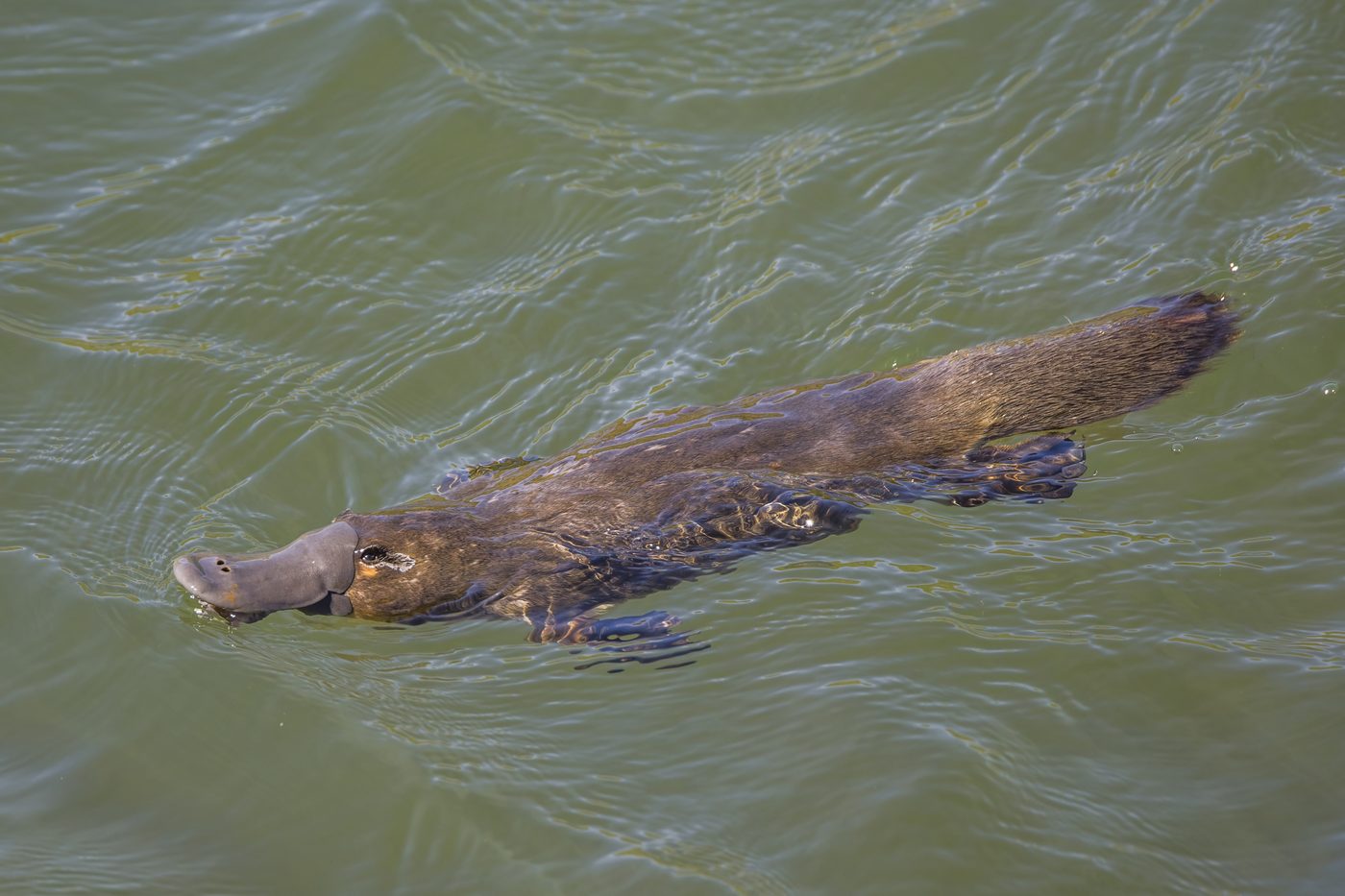
National Geographic reported in November 2020 that a study in the journal Mammalia found platypus pelts give off a blue-green glow under UV light. The team found it while lighting preserved squirrel pelts at Chicago’s Field Museum and, out of curiosity, doing the same to a platypus specimen stored there. The article adds that another paper had reported a freshly killed platypus on an Australian road glowing under a black light. As for purpose, the article says it is still unclear. Study lead Paula Anich says it may help the animals avoid predators that can see UV light, and it is also possible the trait has no real function.
Flying squirrels: pink fluorescence in a mixed-species museum sample
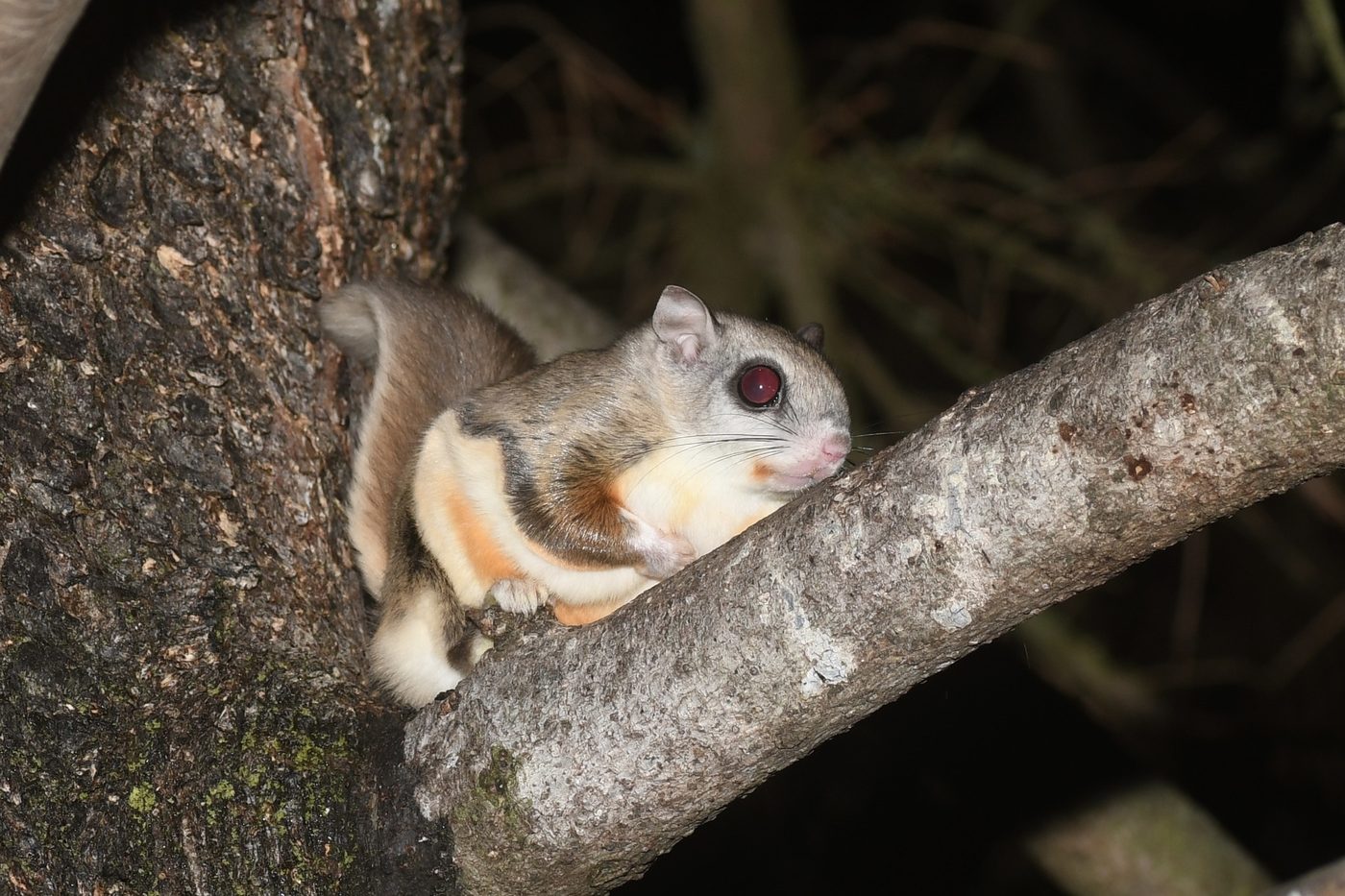
Smithsonian magazine reports that Northland College forestry professor Jon Martin pointed an ultraviolet flashlight at a flying squirrel at a bird feeder in Bayfield County, Wisconsin, and its fur glowed bright pink. His team then analysed 135 squirrel skins, including both flying and non-flying squirrels, at the Science Museum of Minnesota and Chicago’s Field Museum. All but one of the Glaucomys (New World flying squirrel) specimens glowed, and the other squirrel species tested did not. For why, the article offers recognising each other in low light or warding off predators, and quotes co-author Allie Kohler: “This trait could just be a cool color they happen to produce.”
Swell shark: green through a “shark-eye” camera
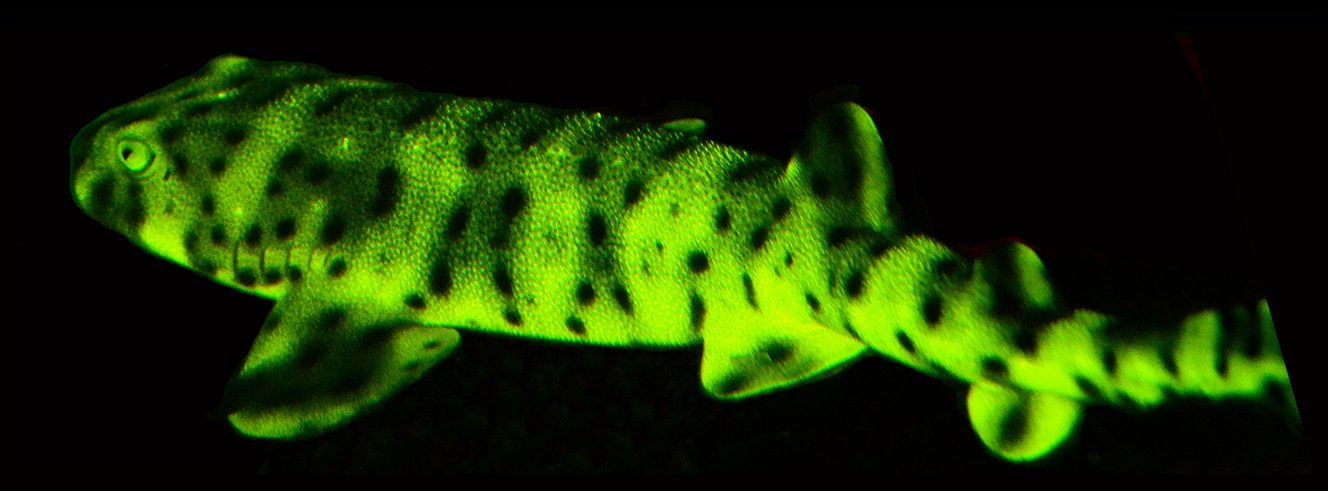
The Christian Science Monitor reported in April 2016 on a Scientific Reports study of swell sharks and chain catsharks, which look dull to the human eye but, say the scientists, can glow brilliant green to each other. The team built a camera with filters matched to the sharks’ eye pigments and dived in Scripps Canyon, off San Diego. Their model suggests the contrast of the glow increases as the sharks swim deeper. The Monitor says the scientists can only speculate on how it helps, perhaps to identify or communicate with one another, and quotes Georgia Southern University researcher Christine Bedore as “pretty doubtful that the fluorescence has any ecological relevance”.
Polka-dot tree frog: the first fluorescent amphibian
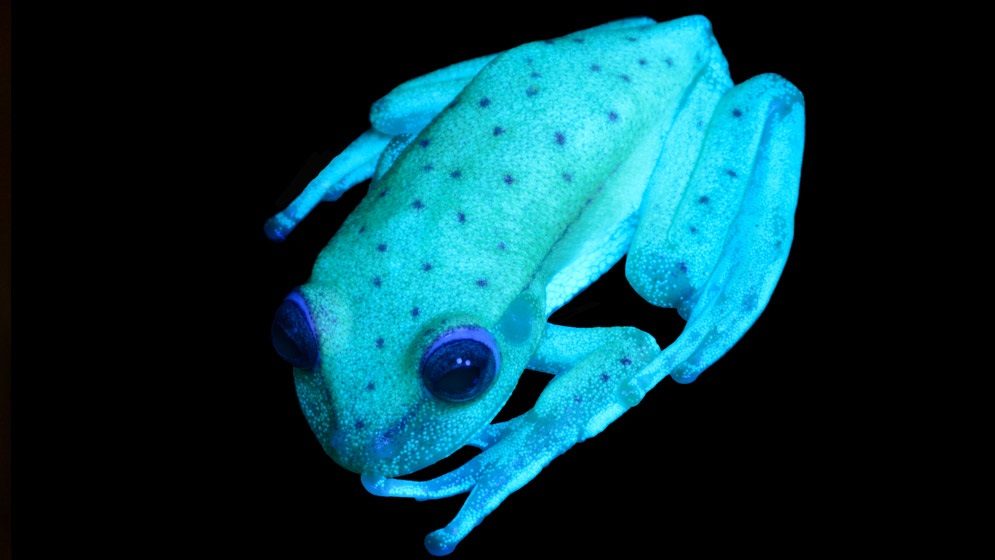
Physics Today reported in May 2017 that a team from Buenos Aires and São Paulo had made the first observation of naturally occurring fluorescence in an amphibian, the polka-dot tree frog, Hypsiboas punctatus. Lit with 400 nm UV, the frog gives off bright blue-green light, which the team traced to fluorescent compounds in its lymph and skin glands. They estimated that fluorescence accounts for 18 percent of the light emerging from the frog at night under a full moon, and approaches 30 percent at twilight. Because the emitted spectrum is well matched to the peak sensitivity of amphibian night vision, the article says this suggests the glow plays an important role in how frogs see each other.
Scorpions: a glow found in virtually all of them
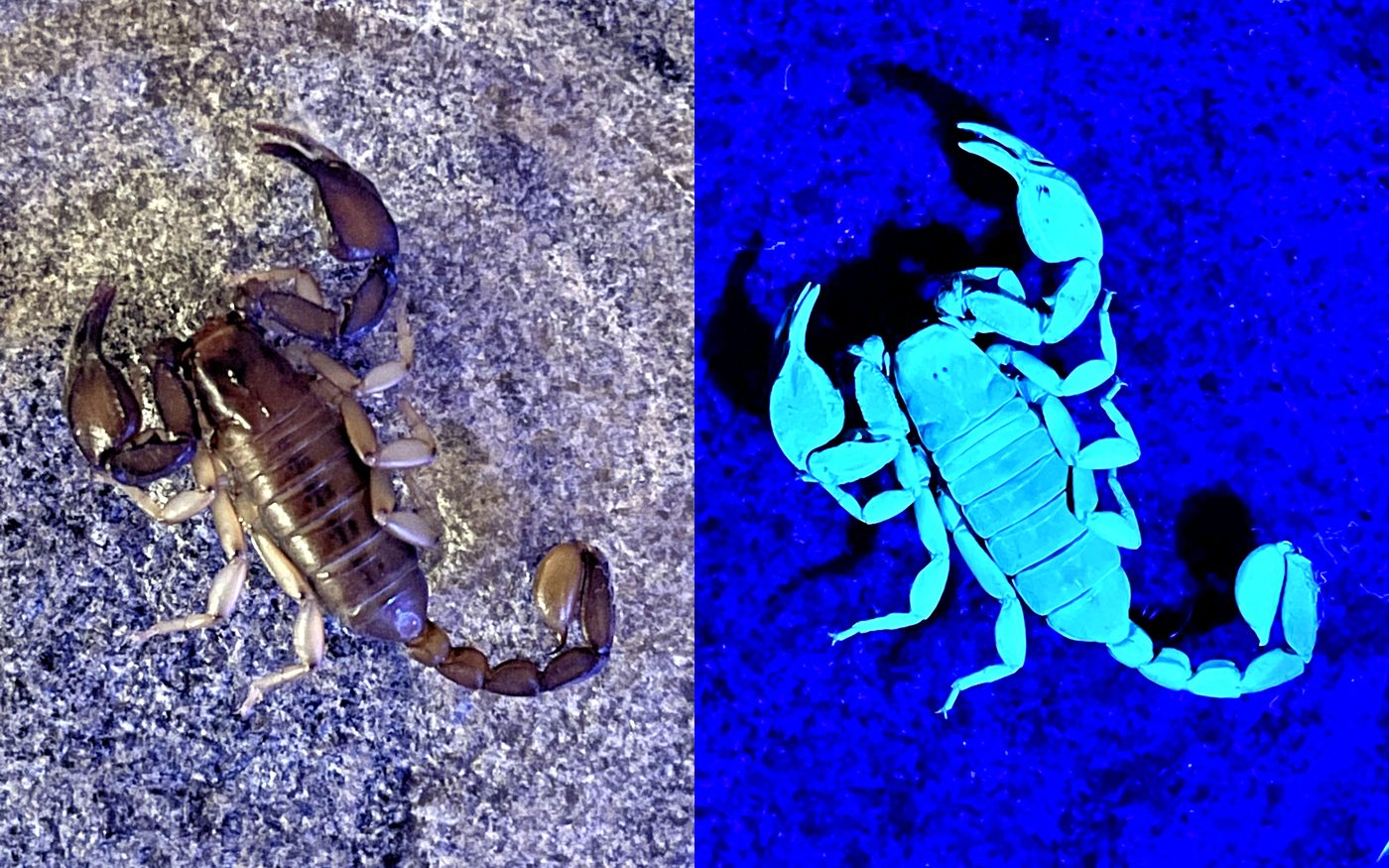
National Geographic reported in March 2026 that virtually all scorpions fluoresce under ultraviolet light because of special substances in their exoskeletons. It adds that fluorescence is widespread in insects and arachnids, but why is a mystery. Scientists have hypotheses, it says: camouflage, signalling to mates, or sun protection, but hard evidence is scarce. A May 2025 National Geographic article says several studies seem to suggest scorpions may be able to use their glowing exoskeletons to sense ultraviolet light and move away from it, perhaps to hide on moonlit nights.
The bottom line
The sources agree on what fluorescence is but not on what it is for. For the platypus, flying squirrel, shark and scorpion the purpose is given only as hypotheses, and one researcher quoted by the Monitor doubts the shark glow matters ecologically. The frog report goes furthest, with a suggestion based on the match between its glow and amphibian night vision. National Geographic also quotes mammal researcher Linda Reinhold saying photoluminescence is “the norm, not the exception”, so glowing animals may be far more common than these five cases.
Sources
- We knew platypuses were incredible. Now we know they glow, too, National Geographic, 11 November 2020, read 27 October 2026 (nationalgeographic.com)
- Flying Squirrels Glow Fluorescent Pink Under Ultraviolet Light, Smithsonian Magazine, undated page, read 27 October 2026 (smithsonianmag.com)
- These sharks glow brilliant green in the dark ocean depths, The Christian Science Monitor, updated 27 April 2016, read 27 October 2026 (csmonitor.com)
- Frog fluorescence, Physics Today, 1 May 2017, read 27 October 2026 (physicstoday.aip.org)
- Scorpions, spiders, and other creatures that glow in the dark, National Geographic, 19 March 2026, read 27 October 2026 (nationalgeographic.com)
- Pink squirrels and green sharks: why do so many animals ‘glow’ in UV light?, National Geographic, 9 May 2025, read 27 October 2026 (nationalgeographic.com)