
Each machine below is described in the words of the museum, university or agency that holds its history. Any claim to be a “first” is credited to whoever makes it, because the sources do not agree on one answer. The order is by date, and every page was read on 27 October 2026.
1941: the Z3, shown today as a working replica
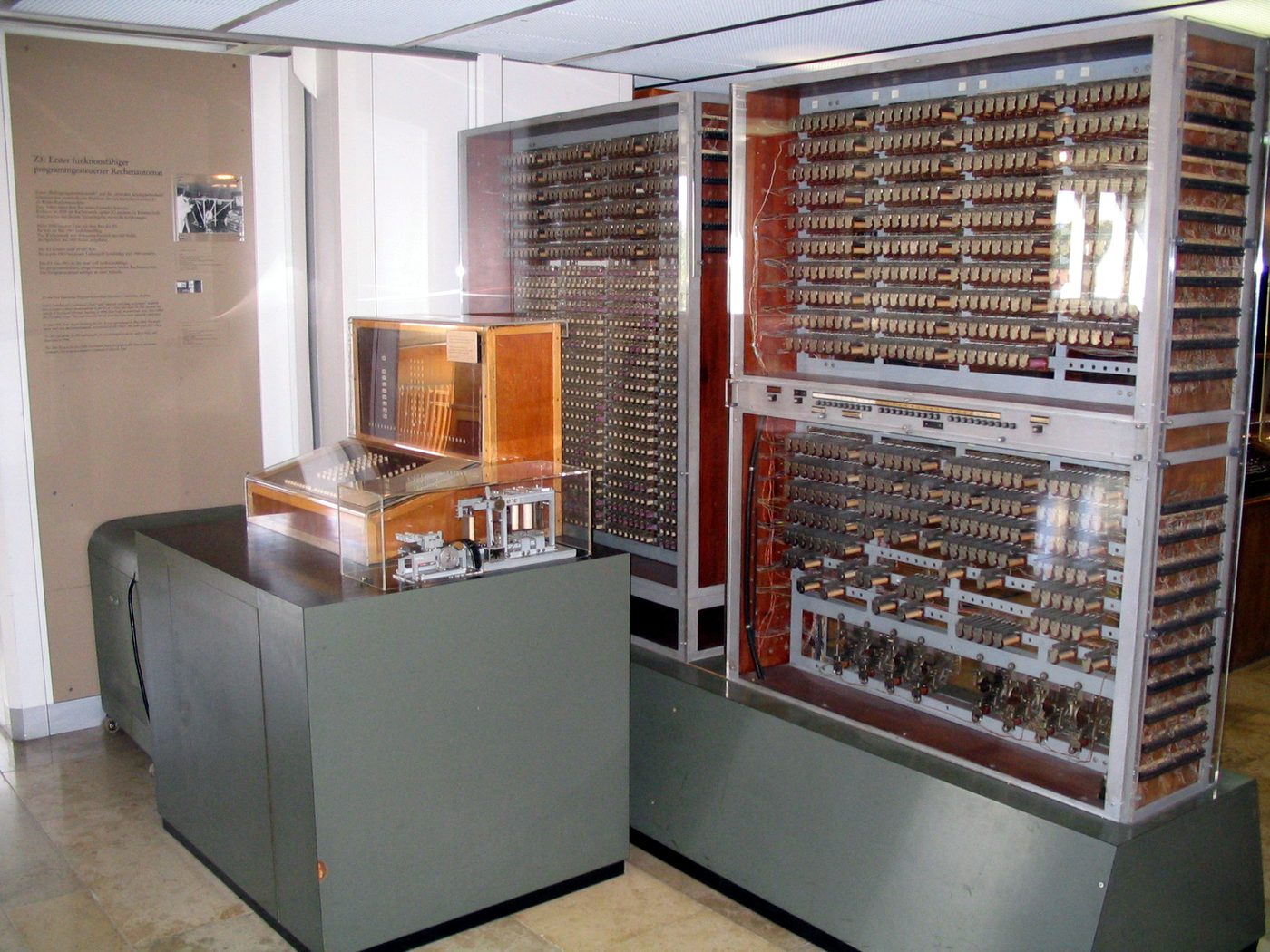
The Deutsches Museum says the Z3, which was destroyed in the war, was first fully functional in 1941 and is regarded as the first freely programmable, fully automatic calculating device. The museum shows and demonstrates a working replica authorised by Konrad Zuse in its Informatik exhibition, and its exhibition text says the era of universal computers begins in 1941 with the Z3.
Colossus: a wartime machine kept secret for decades
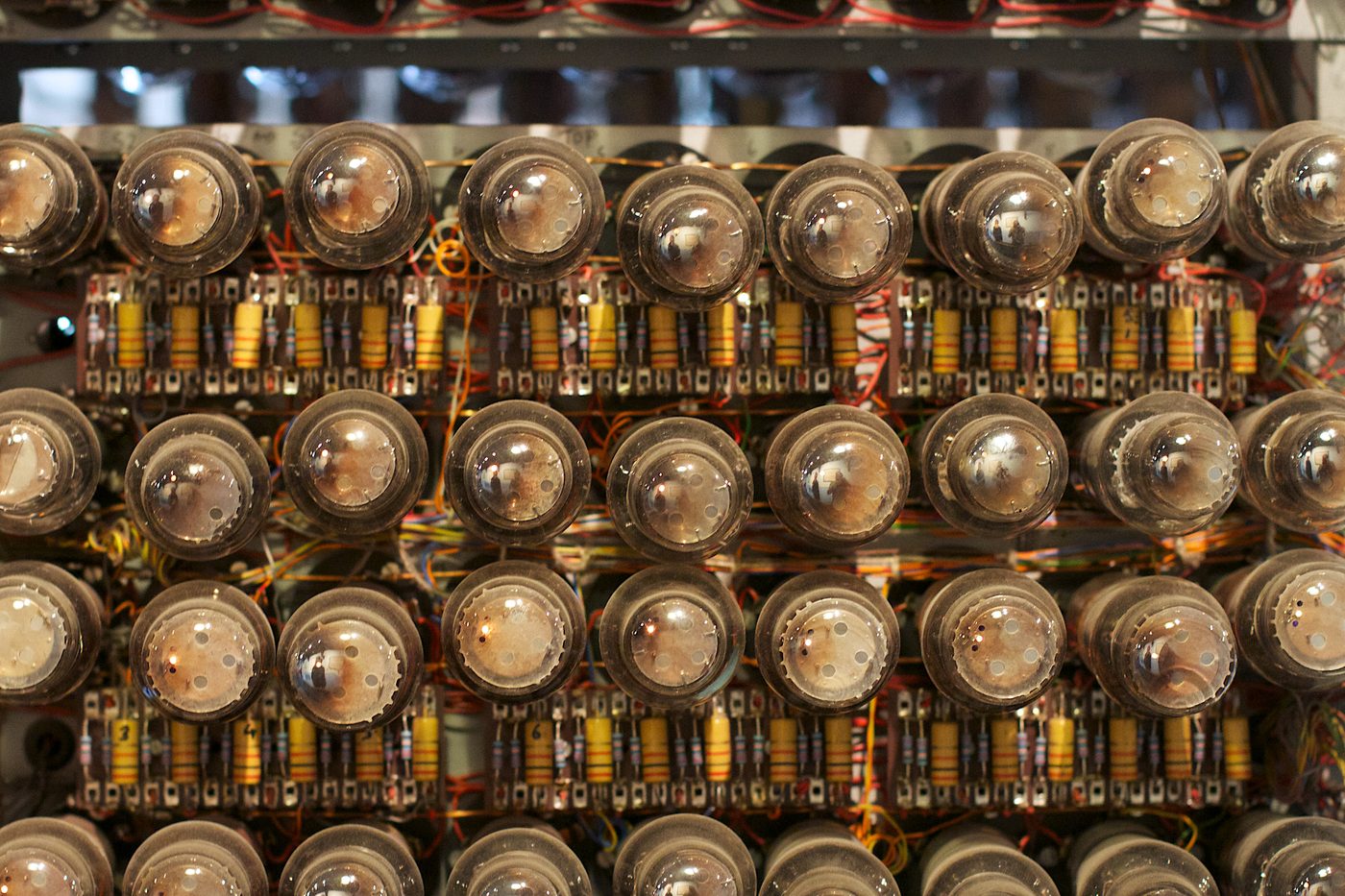
GCHQ, in a release published on 18 January 2024 marking 80 years of Colossus, says the computer was created during the Second World War to decipher strategic messages between senior German generals. The National Museum of Computing says that not until 1975, when the first information about Colossus was declassified, could the story begin to be told. GCHQ says Colossus used around 2,500 valves, stood more than two metres tall and is considered by many to be the first digital computer. GCHQ’s profile of Tommy Flowers says ten Colossus machines were eventually built, that eight were dismantled after the war and that GCHQ kept two.
1946: ENIAC, thirty tons of vacuum tubes
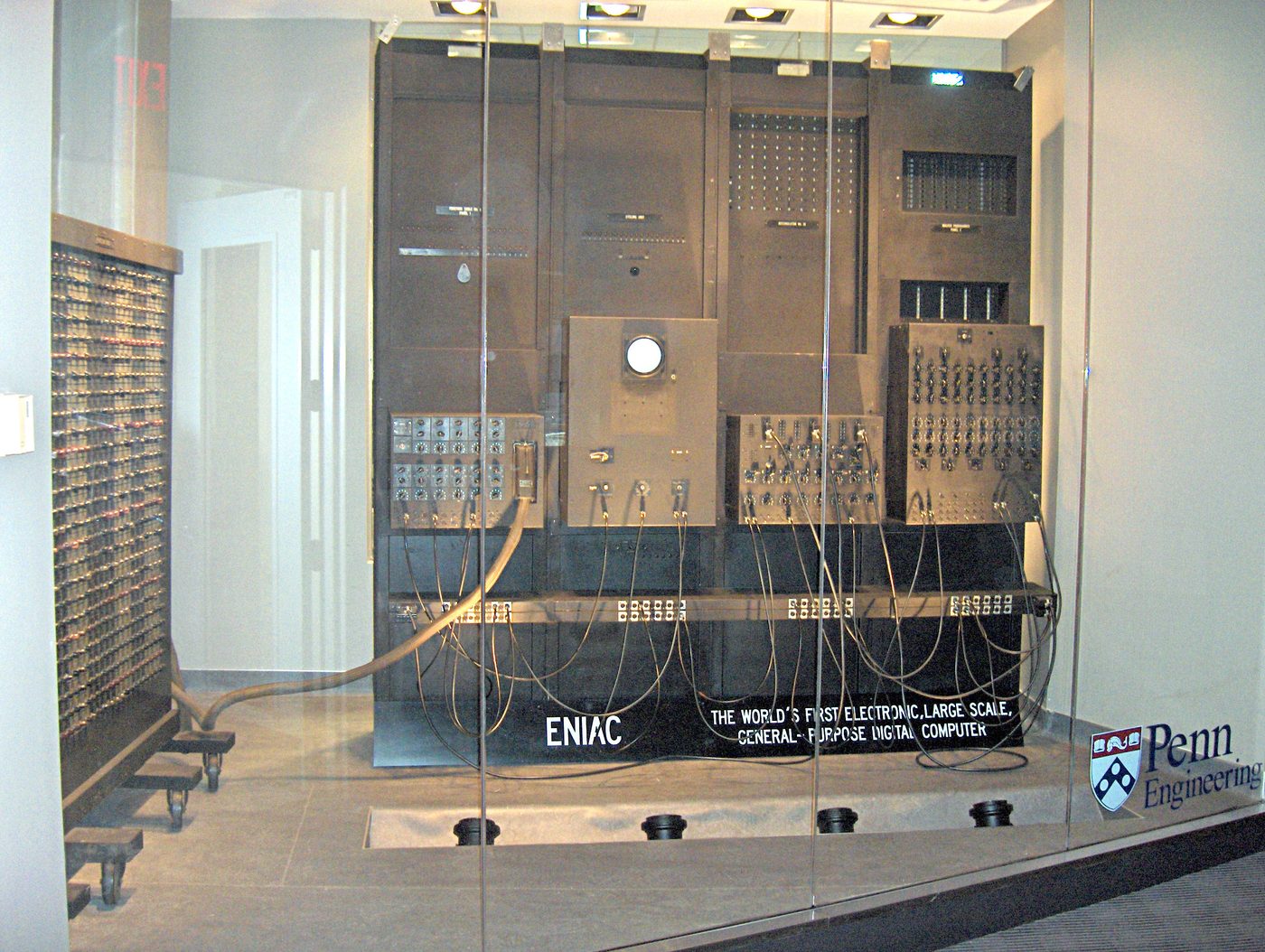
An IEEE milestone page says engineers put ENIAC into operation at the University of Pennsylvania in 1946. It says the machine contained more than 18,000 vacuum tubes cooled by eighty air blowers, filled a 30-by-50 foot room and weighed thirty tons, and it calls ENIAC the world’s first large-scale electronic general-purpose digital computer. The University of Manchester’s Digital60 page adds that changing the circuitry for a new task could take days on ENIAC.
21 June 1948: the Manchester Baby runs its first program
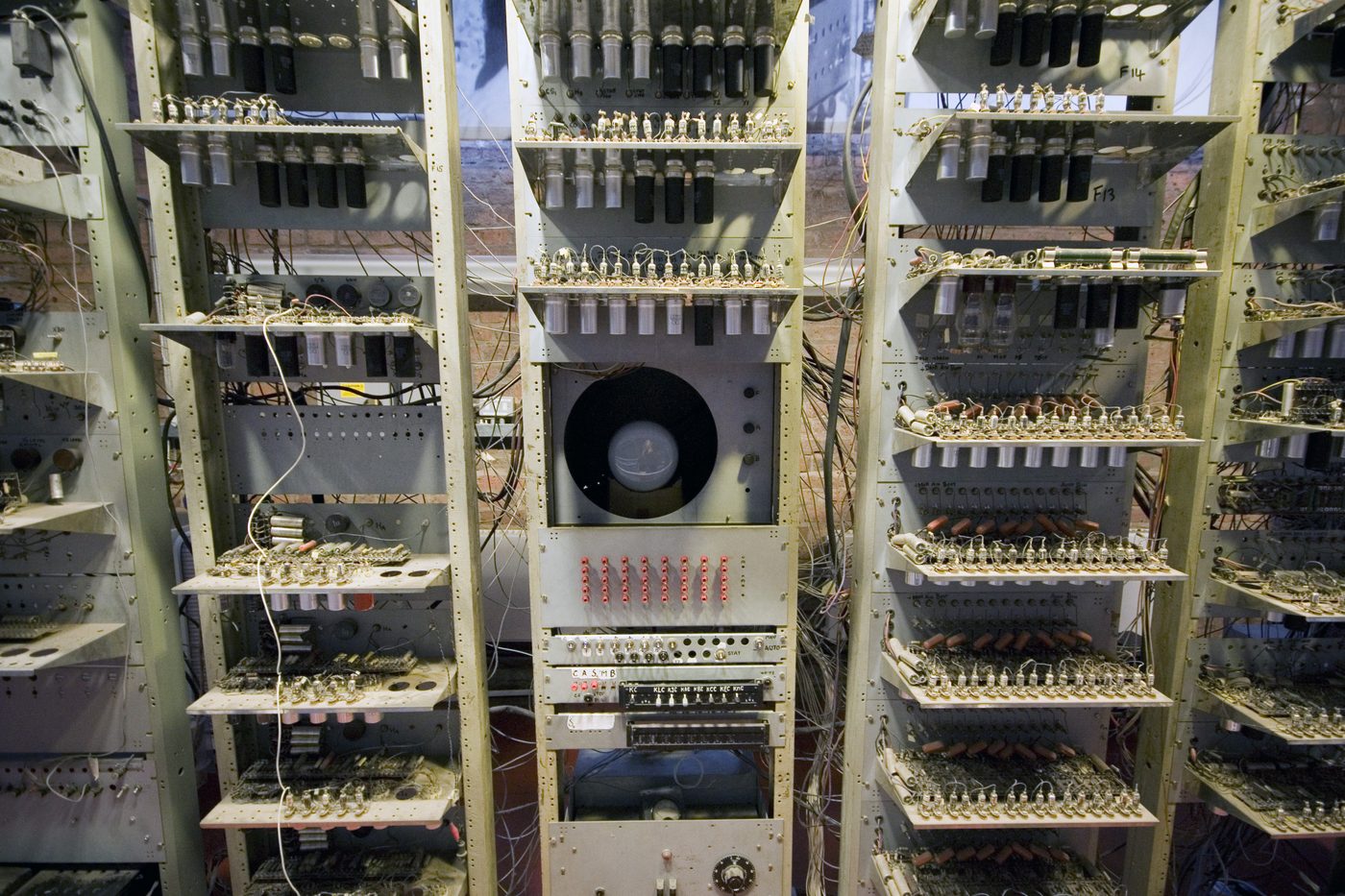
The University of Manchester says the Small Scale Experimental Machine, nicknamed the Baby, started running its first program on 21 June 1948 and became the first computer in the world to run a program electronically stored in its memory. The same release says calling it the birth of modern computing is a matter of opinion. The university’s Digital60 page says Tom Kilburn wrote the first program, which determined the highest factor of a number. The photo shows a replica.
1951: UNIVAC I at the Census Bureau
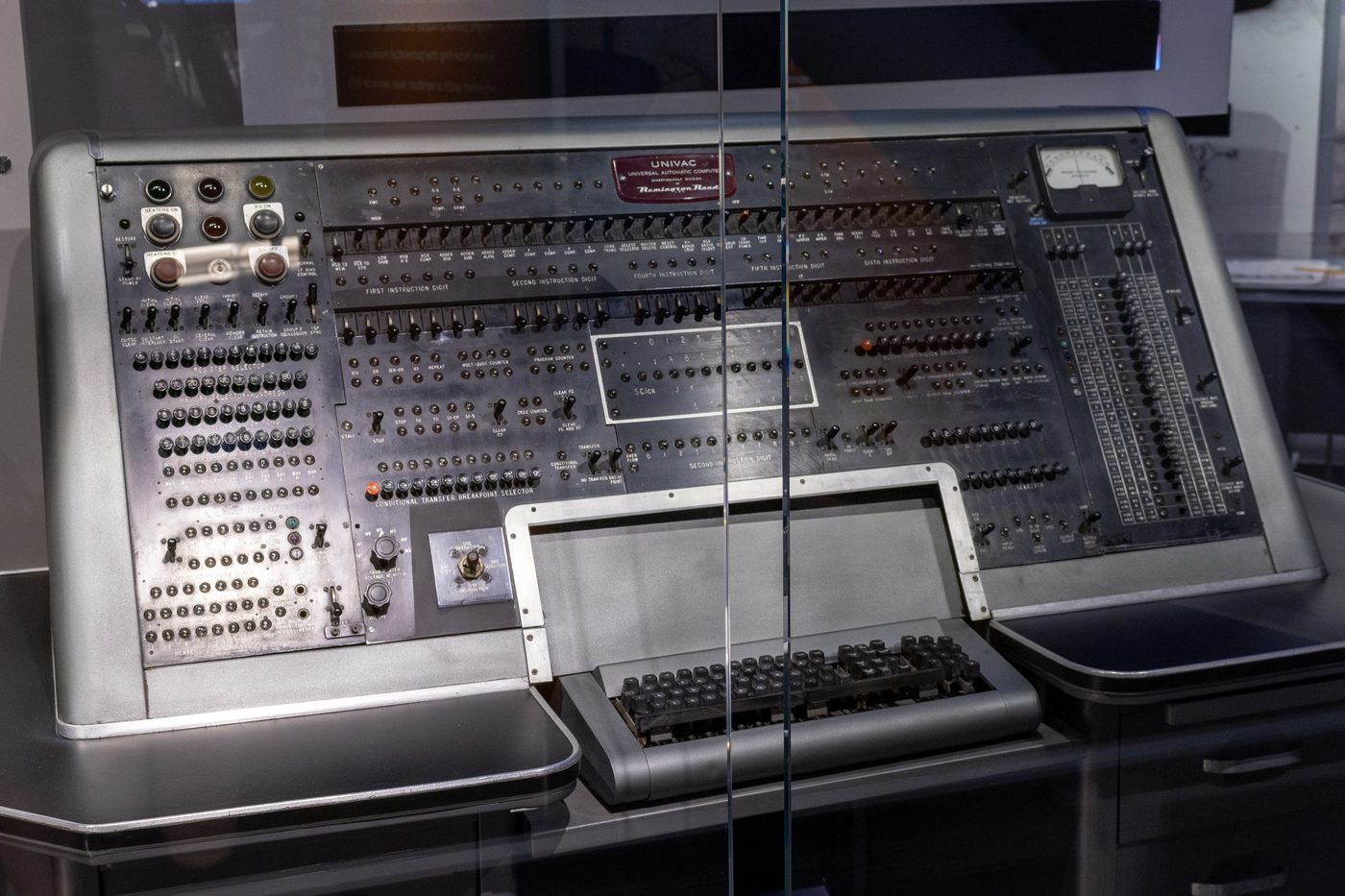
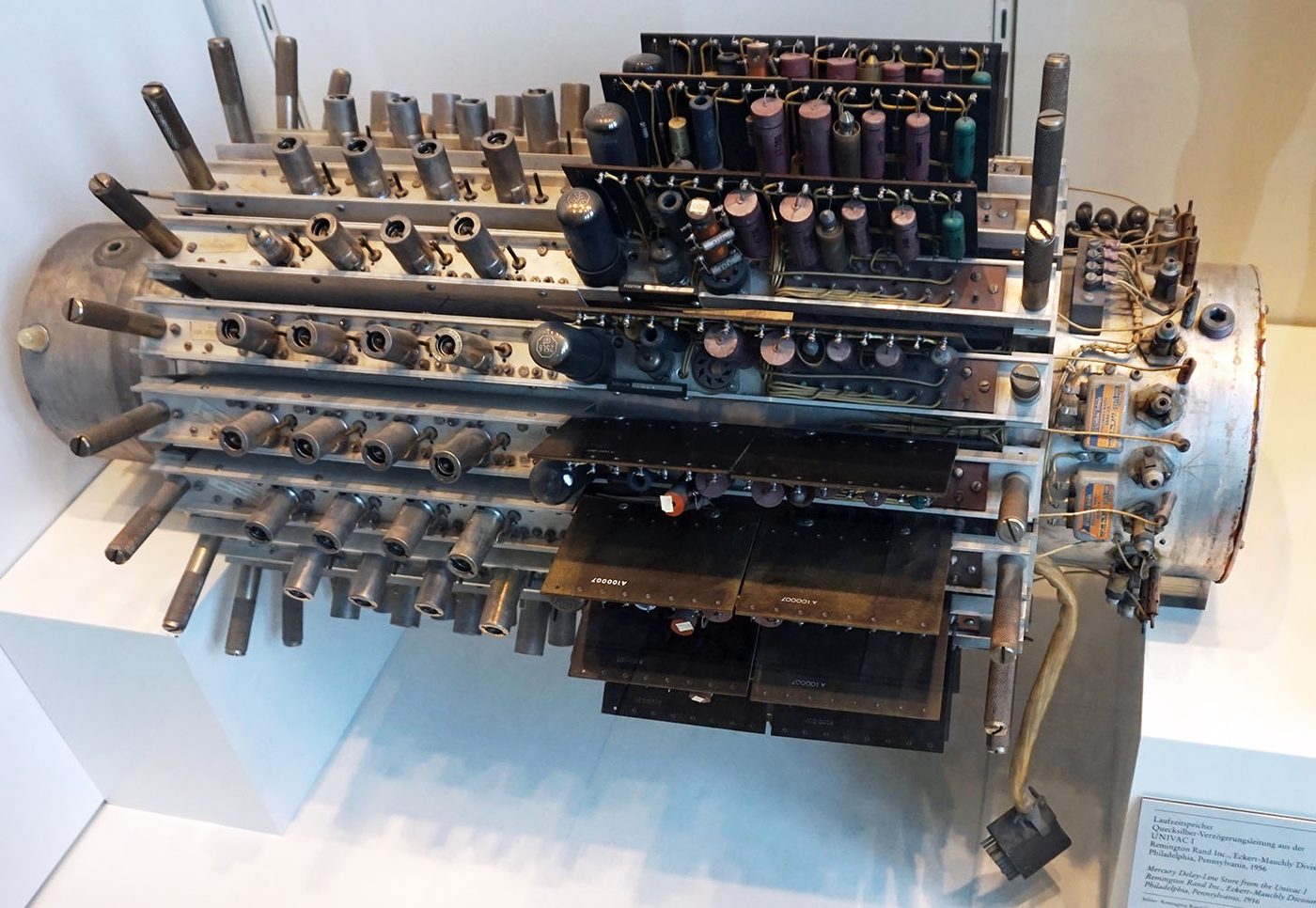
The US Census Bureau says Mauchly and Eckert began building UNIVAC I in 1948, that the Bureau signed a contract for the machine on 31 March 1951 and that a dedication ceremony followed in June of that year. It says UNIVAC I tabulated part of the 1950 population census and the entire 1954 economic census, and calls it the first successful civilian computer.
The Apollo Guidance Computer: the contrast
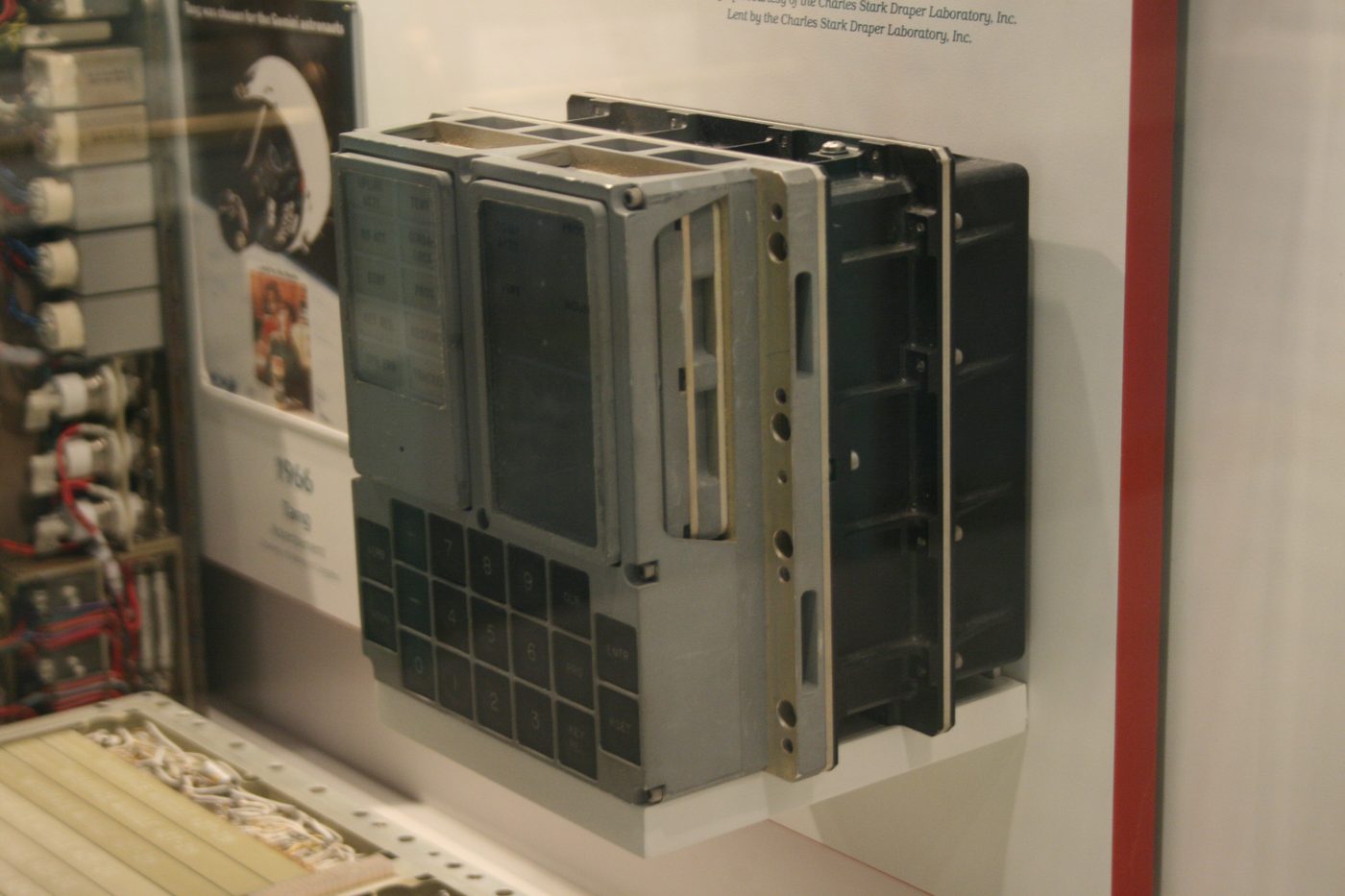
The National Air and Space Museum says each Apollo computer contained 4 kilobytes of read-write memory and 72 kilobytes of read-only memory, the latter stored as wires threaded through magnetic cores, a “core rope”, mostly by women chosen for their manual dexterity.
A separate museum record describes an unflown Block I unit, 62.2 × 39.4 × 14.6 cm, built by Raytheon with about 4,000 integrated circuits. Block I computers flew on three unmanned Apollo tests between August 1966 and April 1968. The two pages describe different things, so their figures are not combined here.
The bottom line
The “firsts” differ by source and wording: the Z3 as the first freely programmable automatic calculating device (Deutsches Museum), Colossus as considered by many the first digital computer (GCHQ), ENIAC as the first large-scale electronic general-purpose digital computer (IEEE) and the Baby as the first to run an electronically stored program (University of Manchester). They are separate claims, each credited to its source.
Sources
- Konrad Zuse and Universalrechner pages, Deutsches Museum, read 27 October 2026 (deutsches-museum.de)
- GCHQ celebrates 80 years of Colossus, GCHQ, published 18 January 2024, read 27 October 2026 (gchq.gov.uk)
- Tommy Flowers, GCHQ, read 27 October 2026 (gchq.gov.uk)
- Milestones: Electronic Numerical Integrator and Computer, 1946, IEEE, ETHW, last edited 26 May 2026, read 27 October 2026 (ethw.org)
- How a 70-year-old Baby changed the face of modern computing, The University of Manchester, 21 June 2018, read 27 October 2026 (manchester.ac.uk)
- The Baby, Digital 60, The University of Manchester, read 27 October 2026 (curation.cs.manchester.ac.uk)
- UNIVAC I, US Census Bureau, page last revised 14 August 2024, read 27 October 2026 (census.gov)
- The Rope Mother: Margaret Hamilton, Smithsonian National Air and Space Museum, read 27 October 2026 (airandspace.si.edu)
- Computer, Guidance and Navigation, Apollo, Smithsonian National Air and Space Museum, read 27 October 2026 (airandspace.si.edu)
- Colossus, The National Museum of Computing, read 27 October 2026 (tnmoc.org)